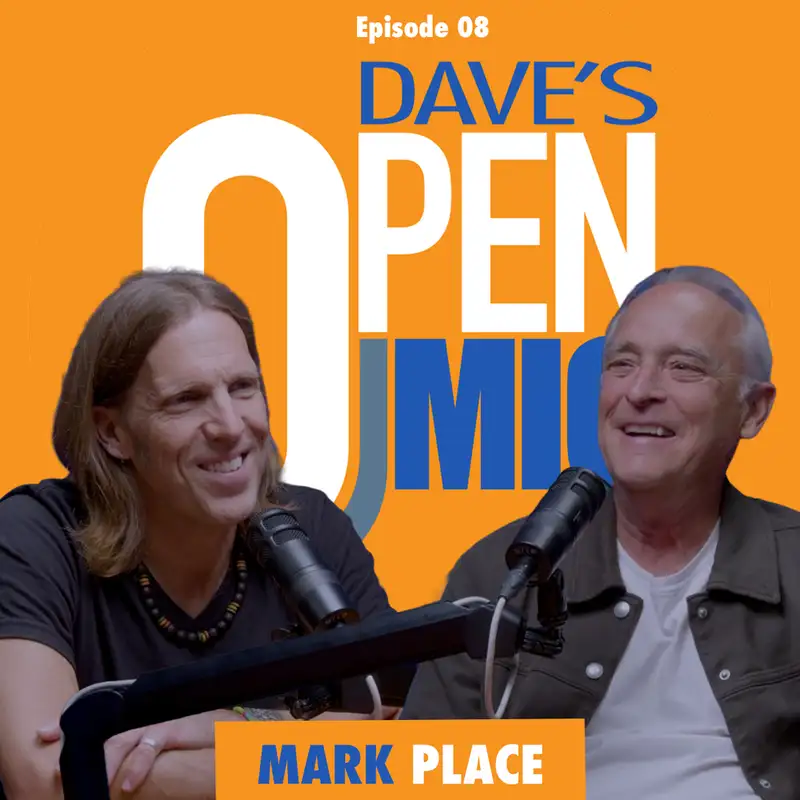
 Episode 8
· 01:06:37
Yeah. So we met.
We start for chamber or what?
A couple a few months ago
when you were promoting the Connecticut,
I would say Arts League,
but I don't think that's right.
It's arts for learning.
I was completely I was completely arts
for learning in Connecticut.
What did what do you did?
What do you guys do?
Arts for learning
is A501 C3 nonprofit organization.
Been around over 40 years,
and the mission is to bring
the various avenues of the arts
to schools and school children.
But beyond the arts aspect, it's
a way of allowing children to grow
and understand things beyond the.
Memorize and obey
kind of model of school,
you know, gives them a chance to explore,
to develop their
communication skills, strategic
thinking in a different way.
You know, it's important.
Net benefits to introducing the arts
and the freedom to explore, right.
And get out and do something that you
could be a little bit more creative and,
you know, meet different people
with sort of the same thing.
It's it's funny when you're saying about
get out and explore.
I've done a lot of jobs for high schools
that have ag departments,
and you talk to these kids
about why they did AG.
Some of them were like, oh,
because I want to,
you know, be a veterinarian
or I want to work on a farmer.
But that was actually
that was not the majority of the majority
was like, well, I just
I just like getting out.
I don't want to be in the classroom.
This is something different,
you know, doing different things.
I'm working with my hands,
like working with my hands, you know.
So it was, it was that
it was just because it was a different
it was a different thing.
And you think differently
and you do different things. Yeah.
So that's kind of similar to like the,
you know, the arts
and what you guys are doing
get kids out there just out there
have to be a talented artist
to enjoy the time
and exposure to thinking creatively.
Yeah.
Differently yourself, problem
solving. Yeah.
You know,
there's all kinds of net benefits.
Yeah.
So do you have like because I saw there's
a bunch of like volunteers
or I don't know
if their volunteers are paid or whatever,
but they go into the schools
and then they some are like singers
and then there's artists
and there's different musicians.
And then these like workshops
that are held.
Is it a regular thing?
How does that all work? Right.
So there's a roster of over 100
wow, various artists
in all disciplines of the arts.
So it could be dancing,
could be singing, could be
poetry, you know, all different forms.
And we work with schools or school systems
to work cohesively with their curriculum
so that we drop in things
that are appropriate, that align
with what they're, you know,
trying to have students learn
and then jump
in a program that complements
those things in a more creative manner.
So we are hired by the schools,
bring in artists on the roster.
Did you just public schools, private,
all schools.
I think it's mostly public. Okay.
I think both across the. Okay.
And what is
what are sermons to be like the area
where you get the most business, I guess,
or does it is that the concentrations
on the, on the highways.
So if you take the major cities.
Oh, interesting. Okay.
So take I-95 east and west.
It's seems to me,
you know, more populated
in those cities along the main routes
rather than the rural area.
We'd love to do more work, sure,
but sure, everyone's impacted by budget.
And yeah, budgets been affected
enormously in the last 12 months.
You feel more urban areas
then as opposed to.
Yeah, I think so. Yeah. Yeah.
Okay.
We're open to everywhere.
You know, it's a matter of those schools.
Usually the urban centers have larger
population
standing school, whereas in a area
it might have like a school
that serves 5 or 6 pounds
and becomes a different equation.
Why did the organization come to be now?
I know I don't remember
when I was going to school
if there was anything like that,
but we had, you know,
we had really good arts
programs, orchestra and fine
arts, painting and such and Montclair
and all that kind of stuff.
And but we also had like
home and we had, you know,
mechanics if you wanted to
take it and would shop,
I think would shop was required.
I don't think mechanics.
I think woodshop was anyway,
so but over the years,
I think a lot of those things have gone
away.
I know, like the home
and the which has, has have you
you felt that like the reason they're here
is because maybe a lot of arts
programs have, have been, pushed aside.
I think that that's starting
to be part of the equation,
you know, back in time, I, you know,
I also took woodshop.
It was built in and I.
Yeah, like the craziest looking birdhouse.
Yeah, of course, I, I built
a, I built a lamp and,
and actually about the lamp, it's funny
and I don't know where my lamp is.
I think it got lost somewhere
along the travels, but,
my dad, who went to
high school
obviously many years before I did, has,
like, it's almost an identical lamp,
which is crazy.
Yeah, yeah, it's the square base
with the square stem, I guess.
And the lamp and the shade. Yeah,
it's pretty funny with the pole thing.
Yeah, yeah, yeah,
that's pretty cool. Yeah.
So those used to be a broader programs
in every school curriculum.
And I think those started to
shrink trunking
and of course music programs
keep getting slashed.
Yeah.
You know what we might have been 40 years
ago was a specialty program.
I bring in a maloney dancing group.
Right.
Because we're going to study
Southeast Asia, you know, kind of thing.
It would be a specialty event.
Now we're supplemental and in some cases
for schools we become the arts program.
Oh, wow. Interesting.
You know, on the arrangement
that the school needs.
Yeah, yeah.
Because it was required
to, to play an instrument.
I was coming up, you know,
I think we started in fourth, fifth grade,
something like that.
Yeah. I think you had to start and then
I can't remember if you had to take it
all the way through high school.
I think eventually you could
once you reach certain number of years,
you could drop out.
But I ended up playing.
I played upright bass.
I played all the way through.
I started with violin.
I didn't work out well,
and I think probably in
sixth grade or seventh grade,
I only play violin for a year or so.
I switched to upright bass and I played.
Yeah, upright bass. Yeah, that was fun. No
no no
no, because my folks rented the bass.
So once I graduated,
I was into my bass career.
Yeah, it was fun.
I had two,
I had a, I had private teacher,
so I had two, two different
private teachers.
One was
he was a little bit older gentleman.
And he was very much,
you know, the curriculum of the school
and the orchestral music
and the other thing, which was great.
It was really good.
And then I think,
and I can't remember which, which was
who was first or second,
but I had this other guy
who was much younger
and we would just rock.
We would just do jazz all day.
He would teach me all these jazz
riffs and everything.
Yeah. So that was a lot of fun. Yeah,
yeah, yeah.
So that was a lot of fun.
Very cool.
Yeah, it was a lot of fun.
These guys, these jazz musicians I, I,
I told you earlier,
I had a rock group in here.
They had a little acoustic trio.
They were playing two guitars
and an electric bass. And
this guy's been playing bass a long time
just to watch the bass player.
Yeah, yeah, it's so much fun.
Yeah, I just, I can't, I wish maybe
someday, but probably not feel good.
Yeah, yeah, it'd be good.
Sparkle strike.
Yeah, maybe I do do hand drums
sometimes I got that going on.
Or you just want to do a big festival.
Imagine. Yeah.
It's some kind of
I didn't, I didn't there was.
No there was no, I guess so I've only been
going this for a couple of years,
and I guess it used to be this big ongoing
drum circle and that got dissolved.
I don't know what happened, but it's.
I didn't see it or hear, but no, I was
just doing a lot of dancing, that's all.
Yeah, yeah, not so much playing.
I'm more of an an enjoyment, enjoyment
taker of music as opposed to.
But I used to play
I play hand drums a lot. Yeah.
Similar to you
when I was whatever age 12 for something.
And I
take it back, you talked about it.
You get an instrument in school,
you go for a tone net, a little plastic.
Yeah, yeah, yeah, that's right.
I forgot about that.
And then somewhere along the line,
fifth, sixth grade,
you get to pick an instrument. Yeah.
I told my father
I wanted to play the saxophone.
Oh, boy.
And he goes, oh, that's great,
because your cousin Mary,
she has a clarinet
that she's not playing anymore.
That's not.
He said.
Yeah, but everyone learns
how to play the clarinet first.
They do. Okay. Yeah.
And so so I went on the clarinet there
for a couple of years.
Okay, but I didn't.
I didn't enjoy it.
So then I wanted a guitar. Yeah, yeah.
And it came with the caveat
that you have to take lessons on the,
the guitar from used to be a place in Fair
Haven, okay.
And he dropped me off.
And they give you a little Mel Bay
book to start and did the first like week
the second week, and then a third week,
I turned to the guy.
I was like maybe 12, 13, 14 something.
Yeah, yeah. And I said, I,
I don't think
this is like what I want to be doing.
Can you teach me the blues?
And he said,
I can't teach you the blues here,
but if you want to take private lessons
at my home, okay, we could explore that.
And luckily my dad was okay with it.
Oh, cool. All right.
And this guy, Jim DiMartino,
I don't know if he's still around,
but he was a classical guitarist
by his practice.
But what he did was on Saturdays,
I would go there for an hour and a half
in the morning on Saturday morning,
and he just got my ear and mind to open.
He would play for me.
Miles Davis would play for me, Bach,
he played for me, the Beatles.
He would he would just keep exposing me
to all different forms of music.
Yeah.
And I think that was to see where
what attracted me.
Interesting.
What kind of like what did you listen
when when did you perk up?
I guess is. Yeah.
And then we spent the last
half hour playing.
We pick out a progression
and we'd play against that, you know, or
some melody or whatever it might be where
he'd teach, you know, that's super cool.
Yeah.
And I don't, I don't remember how long
I did that, but it was like
awesome.
It was music history, you know?
Yeah.
You know, it was a exploration.
Yeah. Rather than Mel Bay book.
Page ten.
Play spot the dog. Yeah, yeah, yeah.
No I remember doing that.
Like the doing the and all that. Yeah.
No I mean I don't know,
maybe if I got exposed to bass differently
and maybe I'd still be playing
because I did enjoy it.
I wasn't very good.
I was first base in the orchestra.
But I think that's only because.
Because there was a guy who was a year
below me, it was much better.
It was much more dedicated,
much better bass player than me.
But I think the conductor was kind of
like, I'm a senior, all this guy, I think.
So he threw me a bone. Yeah,
he gave me the seat.
But yeah,
I don't think the guy I forget his name,
the guy who's a junior,
I don't think
he might have even been a sophomore.
I don't know, I just know
he was very much a I would goof around.
I mean, it was I was high school.
I was just having fun.
Yeah, but it was
it was a fun instrument to play.
Yeah.
When I was in high school, I went to North
Haven High School local, and
the years I was there
went under some kind of strange change
that he didn't have the standard classes.
And people were like grouped
into these different programs.
And one of the programs I was put into
was this music program, and
I really was not an exceptional musician.
I didn't outside of Jim DiMartino
on a Saturday I know formal training,
but got thrown into this class
and it was divided into four sections
over the course of the academic year.
So each semester was divided
in half and one half.
For instance,
was writing for woodwind quartets.
Oh, okay.
Another half was writing
for a string quintet, another was writing
for, you know, 15 piece orchestra group,
and another was writing for a focal group.
I had no talent whatsoever
for David, you know, it's like,
you know, writing notes.
Yeah.
Wasn't my thing, you know?
And I'm like, sweating it out.
But like you with the bass player,
there was this guy Alan.
Okay.
I think he was like
a direct descendant of Beethoven.
Oh my God.
Yeah.
Yeah,
just he would just sit there and just.
He could draw all the dots, just like,
that's crazy.
Have it come to life
that, that that is so impressive to me.
Even if even even if you're not
writing the music, if you're like, just
if you just if you play in the music.
And I told this to the band last night,
they were here, it's like you just
so I always think even like at these
you go to,
it's like,
oh, it's always like a jam session.
You always make it up. These go along,
but then no, it's like,
you know, all those
and you just know them.
You just play and there's like,
yeah, we're always like a few notes ahead,
you know, there's like a few notes ahead.
And so we know
we just know what's happening.
And then they started talking about
like yeah.
And sometimes we'll improv a little bit
and you kind of
just like somebody to do something.
You kind of go off on this thing and like,
what a gift to be able to like
just be able to play an instrument like,
you know, you're just like you're talking
and you can just sort of
I mean, what that is, that is so cool.
My girlfriend and I went to a her
one of her friend's
daughter
was graduating school in Massachusetts.
I can't remember
the name of the name of the college,
but she was graduating
with some sort of a musical arts degree
or something like that.
And she, for her
final thesis or whatever,
whatever it was,
she put together this whole musical show.
And it wasn't
just like an orchestral thing she had.
I think she wrote,
I think she wrote all the music
except for maybe a couple pieces.
But she had like a wind quartet
come on, first to play a couple numbers.
And then she had. No,
she did write all pieces.
And then she had this professional,
string quartet, come on.
Was amazing.
And then she had some other stuff, music
that was electronic.
Composer did this video,
and then I was like,
and I'm thinking about
how did this college?
I mean, she wrote all this music
and it was all a little bit different.
It wasn't in one sort of genre.
It's really impressive.
People can do that is electronic.
There was an electronic element in it.
Yeah, yeah.
In this high school program,
one of the one of the quarters
was experimental sound.
I nailed Alan on that part.
Yeah. Did you?
Yeah. Nice.
I came to the whole thing on feedback.
Okay. Oh, nice. All right.
Yeah. So.
No, it's just it's it's, I just
I just find that because I can't,
you know, I just I would never
maybe I didn't practice enough.
I did buy a guitar at one point
with a big, thick guitar book,
and I learned a bunch of chords.
A lot of my friends helped me because
a lot of my friends are guitar players.
So I learned a bunch of chords,
and I was pretty good
at playing the chords and stuff.
But I always like chords are one thing,
but I always like the picking.
I've always enjoyed
picking like Jerry picks
and then Lindsey Buckingham,
you probably know him.
He's his guitar is just it's amazing.
We saw him in concert years ago, and
it was right after he left Fleetwood Mac.
He put on his own tour and I guess
we caught the first show of his tour.
It was somewhere in Connecticut,
I can't remember.
It was so good.
Yeah, it was so much fun.
And just listen to him play. Yeah.
Super super talented.
Yeah, yeah.
So story about how
Lindsey and.
Who's the main thing I was the female.
Oh, Stevie.
Yeah. Yeah.
Met the drummer. Right.
How that all came together I don't know
if, you know, there's a little bit.
I think maybe Fleetwood Mac was
was touring or something,
and maybe they saw them in a club
because they were just playing clubs.
Lindsey and Stevie at the time.
But I don't,
I don't remember the details of sort of
how they met and got folded into the band,
I can't remember.
Yeah, and I should like this
bound on their story,
but according to article I read.
Okay. Fleetwood. Oh, okay.
He was going into that studio to record
but didn't have
like all the elements together
what he wanted to do.
And Lindsey was a guy
working in the studio.
Oh, okay.
Second
engineer or something along that line.
And Stevie was like
the chambermaid for the for the place. And
somewhere along the line.
Yeah.
You know, things worked out in a big way.
Yeah, in a big way. Yeah.
So you never know the horizon. But.
Yeah, that was I told you about.
The Allman Brothers are based on the next.
We'll see,
we'll see. All right I'm going to go out.
There's a music shop up the road.
Maybe
I'll go pick up a used bass or something.
But before I was an album Brothers fan,
I told you earlier,
I had a neighbor
and his dad had a beautiful sound system.
I was like, really, really nice.
And so I go over there one day and we're
just kind of like playing these records.
And the same thing happened
that I said happened
with Allman Brothers,
happened with Fleetwood Mac.
He put on the first Flew on Mac album
with with Lindsey and,
you know, the whole new lineup
and the same thing I said.
I was like,
who are these people? You know?
And yeah, so yeah, big flew of Mac fan.
Yeah, yeah. It was so good.
Yeah, yeah, yeah, they really did.
Yeah Monday morning. Yeah.
Yeah.
She. Yeah.
She passed not too long ago.
Yeah unfortunately. Yeah.
But she's a great songwriter.
Love her voice too.
Yeah. Lower.
Yeah yeah yeah it was a good everybody.
There was all
everybody was a little bit different.
They all contributed something
and they were all songwriters
and they all had their own songs.
And I think that was
that was really good as a band.
It wasn't just the same, you know?
It was just it was a very different band.
And just Lindsay's
guitar playing was. And it was incredible.
Yeah, yeah, they were fun band. It's.
Yeah, it's a good one.
You can
Lennon and McCartney, you know.
Yeah.
It's combination of writers contributing.
Yeah, yeah.
No, it's it is super cool.
Yeah. So I guess those are my two
earliest, most favorite bands.
But yeah, I mean, my world has expanded
exponentially in the last few years.
Yeah. Which is which is great.
Yeah.
It's fun kind of opening your ears
to new stuff and, you know, open to it.
I saw the Allman Brothers,
Quinnipiac College.
Oh, boy knows what year that was.
Okay,
but I think they were the opening act.
Oh, interesting. Johnny Winter. Wow.
Yeah, yeah.
Tickets were like $2. Oh, yeah. Right.
Yeah. Right. Yeah,
I know we know who they were.
Yeah.
Pretty incredible.
Those guys. And then sad, like.
Yeah. So Duane died,
and then Barry died, and.
But they still. They still went on.
Yeah.
Greg is, Yeah, I remember I saw Greg,
Greg played in a movie or something.
Greg was one of my hair.
I got to say, Greg's
just one of my heroes. I think he's just.
Yeah, he's amazing.
Individual kind of what he went through
and the progression of that band
and just the songwriting. But
could have been a dentist.
Yeah, yeah, yeah,
I think so. Something like that.
I kind of remember reading that.
I was reading
was it his was his, his memoir?
I think it might have been his memoir
that came out.
I was reading that. Yeah.
He thought he would be.
Yeah. Yeah.
That's right. I, I think you're right.
I think it was I yeah I know right. Yeah.
But I think it was something like that.
Yeah, yeah, yeah.
It was not just, but. Yeah it's.
Yeah. There he was. Yeah.
Torn torn the world.
The Allman Brothers is kind of cool.
Yeah. It's good stuff.
And their their legacy lives on.
Yeah, absolutely.
When I did album for Columbia Records,
John Mathias was the producer.
Co-producer?
Yeah. Partner in crime for that one.
But he did Dickey Betts album.
Oh, okay. Yeah.
So connection on that. Yeah.
And Dickie's an interesting person
from a few stories that.
Okay, that enjoyed maybe bear
hunting a little bit more than.
Yeah some aspects of the business.
Yeah.
I think the relationship with Dickey
was a little rocky,
you know, maybe in the mid
to later years of the band.
Yeah.
From what I understand.
But yeah.
So why were you involved with the album.
Did you produce let's get their Mark place
back in the 80s.
Yeah. Columbia Records. Yeah.
The Columbia Records thing. Yeah.
Where do you want
to start with that story?
That's a that's a long path to get to.
Yeah, but.
I talked to Joyce last night.
Yeah. Shared.
Boil it down to one little quick snip at,
we said I'd cut some demos in New York.
Was introduced a really nice guy
that had a small studio and gave me
the honor of being able, over a year
and a half time to develop some 20 plus
demo tracks. Wow.
And then we submitted it.
Someone I knew had a job at Columbia,
and they in turn took that
and gave it to someone.
They gave it to
someone, gave him some and get it someone.
Yeah,
well, and I was totally broke at the time.
I was at my parents house having breakfast
and I left their phone number.
Luckily on the demo tape,
because I didn't have fun.
Right.
And I got a call. Now, when was this?
What year? Like decade at least.
Oh, we're in the 80s.
Okay. When?
The 80s.
Yeah.
And, having a bowl of cereal and. Hi.
This is Don to veto on the head of an R
for Columbia Records and is like
Bob Schmigadoon there and again
and finally get the call.
He's got the wrong name.
You know how crazy is this?
But he couldn't read the handwriting.
Okay, okay.
But then he read the tunes
and we agreed. Gotcha.
So he said he was interested
and we arranged to, you know, to
to a show in New York to essay our studio
instrument rentals, you know.
Yeah.
And, you know, come down and check us out
and see what happens.
You know, no promises, but see what it is.
And took the group down to New York.
We were all from Connecticut.
Yeah.
And piled into SLR and were setting up
and doing the soundcheck
and the guys from sur because everybody
in the world flows through SA,
you know, they're all rehearsing
or renting equipment whatever.
And they asked me, they said,
oh were you playing for today?
And I said,
oh Don DeVito, Columbia Records.
And they go, oh, he doesn't sign anybody.
I could just yeah, yeah.
Just completely like through the whole,
like, you know, into the ground.
But we did our thing. Sure.
And sometimes things
that you don't plan come to your benefit.
Yeah.
I, I had wanted background singers
to record
a couple of these demos, and I couldn't
decide which background singers we had.
A lot of people come through auditions
and I had about seven,
you know,
that kind of narrowed it down to and
when we were going to do this thing at SA,
there were two people out,
but took five, you know,
and it's a four piece band.
So when the Vito walks in the room, he's
got a four piece band
with a five piece background singing.
It's just different, right?
You know, just presented
a different kind of thing.
Short end of the story is we wound up
getting signed by Tom
Vito and him becoming the guy for us.
Don that's awesome.
Produced four Bob Dylan albums. Wow.
I know he did two of the studio albums
and two of the live albums.
So, you know, it was great.
You know, being able to get through that
hoop and onto the label and that's crazy.
From there they, you know, you go to work.
Yeah, I think I wrote
we had a little studio
down in Norwalk
that we would run the demos for.
Okay.
And I think I wrote, we wrote and produced
like 85 songs for a ten song album.
Wow. And every day
my bass player would drive, pick me up.
And as we're driving to the studio, you're
writing a song and figure it out lyrics.
And that's
what we did for like a year time.
So put that many tunes together.
That's crazy.
Where do you get to?
I mean, you're writing in the car, right?
So where do you get your inspiration from
for the just that, just like,
you know,
whatever's happening during that day
kind of thing or something clicks
and you see something
and you just sort of expand.
I know I've heard it from other people.
That right as well.
You're like a conduit, you know,
these things come from. Yeah.
There's something that happens.
Yeah. There's some catalyst. Yeah.
And I'm sure in some cat
something happens to you that results in
some form of lyrics or,
you know, music comes.
Yeah. I guess it's practice to.
I mean, if you just, you keep it as a,
you keep doing it every day or regularly,
whatever it you like one of those guys.
Oh, if you write every day
then you're right.
I'm like I don't know, you know.
Yeah.
It's, you know, it comes to you.
You go, you go with it. Interesting.
Yeah, yeah.
Build it from there. Yeah. Gotcha.
And one of the songs on the new
album is like
five different things over the course of,
like, a three month period.
Yeah.
And I don't know
how number one related to five,
but yeah, eventually
they all wound up together.
The one you just put out
or will be coming out rather.
Yeah yeah yeah yeah.
So we'll play one of the cuts from that.
We'll throw that in the show for sure.
So yeah you know
I'm sure you've talked to a lot of folks
that right.
And play you know.
So I don't know that there was any kind of
advice I could give other than
keep yourself open.
Yeah I guess it's just being open. Yeah.
Like Mike who was here yesterday,
he writes
he writes some really good songs.
Yeah. It's really cool to.
And just knowing him for a couple of years
and his writing skills are getting better.
Everything's getting better.
It's cool to go
see a band or see a musician or something,
and who's good, who's kind of coming up.
And then.
And then you wait a few months
and you go back and you're like,
what happened to this guy?
Like everything's better.
Like just everything.
Yeah. So it's. Yeah,
it's it's really cool.
Yeah. Yeah, it's pretty wild.
Yeah, it's pretty cool.
How long were you with, Don. Dan?
Don Don Don Don.
There's about a five year run.
Oh. That's good.
We. Unfortunately,
there's an old saying about.
It's all in the timing.
Yeah, and
one of the things that worked against us
was the fact that CBS, the parent,
didn't want to fight Sony
for control of the medium.
That was going to be the technology
that was on the on
the horizon being in that time frame.
CBS on the right.
Patent rights to CDs.
Oh, interesting CD format and Sony
on the patent and rights to digital tape.
Debt tape.
Okay.
And the fight was going to be
what does the consumer population
around the world going to use next?
Right. It's going to get out of a track.
Yeah. How it's going to go.
Hey, track
didn't last long I don't think. Yeah.
Yeah.
You're going to go to CDs
or it's going to go to dark.
And you know I'm not the legal expert.
So, you know, I hope I'm not throwing this
the wrong way, but it's kind of
how it was explained to me is that CBS
the foundation of CBS Mr.
Paley was in broadcast.
So radio. Okay.
Where the where the foundational pieces
and then the other components
like movies and film, those,
you know, came later.
Yeah. And highly regarded.
I mean, the Red label is, you know,
that was like the bomb.
You know, if you can get on Columbia,
that was great.
But, TV was having its problems.
Network
television was not being competitive.
They were losing a lot of money there,
and they wanted to bolster,
you know,
the TV side and didn't want to keep paying
the legal fees to fight
Sony over patents and markets and,
you know, and things like that.
And so they wound up
selling Columbia Records.
They wound up selling the, the,
the film end of the enterprise to Sony.
And of course, when you do that
and Sony eliminates all the people.
Yeah. And the states.
Oh, you know, our guy who is the
the head of an art now becomes like
the guy that's has a much lower level non
influential position within the company.
Yeah.
He stayed on.
I you know I shouldn't speak for him.
He had freaking major career.
But you know
his role was greatly diminished.
And a lot of the sign people were,
you know expelled from the company.
So we kind of lost our legs and support.
Yeah.
But that's. Yeah. Happens.
It happens.
Yeah.
What kind of touring
did you tour with people during?
I'm sure you, I'm assuming,
did you tour during that five year stint,
you know, to promote
to promote the records and and whatnot,
just because we were at the cusp.
Okay. We were good at recording.
Okay.
What we were really good
at was getting radio play.
Okay. Surprisingly,
we I don't
know if you know about P1, P2,
no station markets.
You know,
no one market is over a million people.
And the terminology that was back then,
who knows what the terminology is
now because of streaming and everything?
Yeah.
I mean I'm a little filling with Mark.
It's just I've worked in TV, so I kind of
get the whole market share and all that.
You know, large markets, smaller markets,
all that kind of stuff.
Yeah. Yeah.
Same week
that Nick Jagger released his solo out.
Okay. And
we, like, surpassed him.
Wow. 200 radio stations to his 50.
I think it was. That's.
And the thing that we were able to do that
I was told.
I don't know where these facts reside,
but we sold
not only East and West Coast,
which most of the main
Columbia artists sold on first
before they got through the Midwest
as we sold the cost of Midwest.
Okay.
So we captured all three geographies
interesting in the country.
Yeah. Based on a couple of
songs we got going.
Yeah. And
another thing, timing.
I don't know if you know who
Michael Mann is.
Michael Mann's a film producer.
I know the name. Yeah, yeah.
Okay. Oh, yeah.
Yeah, yeah, I know the movie. Definitely.
But back in the day,
he had a TV show called Miami Vice.
Oh, yeah. And the who?
Maybe that's how I know him. Yeah. Miami
vice. Yeah.
The who resurrected their career
with eminence front.
Okay. Miami vice. Yep.
And Michael had gotten a.
An early release on the album
because Columbia would send out,
you know, early, early cuts to Fox.
And he had called and liked the album
and wanted to go on three consecutive
episodes, put one song,
which was a huge coup
for an unknown artist.
Yeah, it was great, you know. Yeah.
Not a fan of the show, but,
you know, fan of the band.
How can you not be a fan of Miami Vice?
I mean, that back in the day, anyway.
Okay.
There you go.
Yeah.
But it was a nice offer, and,
and Columbia put in a bunch of money
to buy a advertising in Billboard magazine
and do all this stuff.
Yeah.
Just before the episodes were a writers
strike hit
and the writers strike killed,
any new shows come out for the next
whatever period of time it was,
and Columbia had to wind up, pulled back.
And we're going to rerelease it.
And for Christmas instead of in February
and then and then CBS sold to.
So, you know, it's just an amalgam of,
yeah, just just off the cliff at the time.
Yeah. But, you know, it's okay.
Yeah, it is okay.
What did you do after after
all that happened and raised a family?
There you go. All right.
Okay.
Yeah.
He means are good.
Yeah. Yeah.
But you always stayed in you.
You stayed.
Always stayed in music,
though, I'm guessing.
Yeah, yeah yeah, yeah.
Yeah.
Maybe not as officers focused, but.
Yeah.
You know,
I met some good players here in the area.
Yeah.
And that was on that vice
back in those New York days
that said you should move back to a place
where you're comfortable,
because I used to get players in New York,
but then all of a sudden
they'd be offered like three grand
a week to go on tour with somebody.
Yeah.
You couldn't get that.
I couldn't get that stability.
Yeah, but I was able to do that here.
Do you ever think about being like
a session musician or anything like that?
If you couldn't.
Like, those are things afforded to you
by word of mouth, you know?
Oh, interesting. It's
not something you apply for.
Yeah, yeah, yeah, yeah.
I mean, I don't know how it works. Yeah.
In my, you know, even earlier youth 19
I was okay and I, and I had the
opportunity of a lifetime 19
I was like the session guitarist
at Electric Ladyland.
Wow. In New York,
you know, and I was a huge Hendrix guy.
Okay.
You know, and what a thrill.
So yeah, I bet somebody records somewhere.
That's cool.
Yeah. Some dusty shelf, like. Yeah.
The experience of being in that recording
studio is freaking awesome.
Yeah, yeah.
Well, yeah, I visited you.
It's,
I don't know, a couple of months ago.
Yeah, yeah. Yeah, yeah.
Are you able to send me that that, just
the the the track, just, the one that.
Yeah.
Because I still got,
I got all that footage
and I got nothing to do with it, cause
I don't have this,
so I want to put that together
eventually on Sunday.
Okay. I also use that one.
I'll send you. Yeah, that'd be good.
That'd be awesome.
Yeah, that'd be awesome.
Yeah, yeah, cause that was fun.
I enjoyed that a lot.
Yeah, you guys were great.
It was cool to watch the process
and watch you play and your band mates
and everything.
And what a what a what a treat that was.
So thank you for having me there.
That was fun.
Oh, yeah. Yeah. That took,
I was working on a different song
and I was really pissed
about a lot of things.
And some of us get what's going on.
Sure, sure.
And I wrote a song and I was working on
called blood in the air.
Yeah.
And, you know, you know, really digs in.
And somewhere in between writing,
getting the exact lyrics together
and all this, all of a sudden
this other song comes flying in,
and this one's all complete for you, sir.
Yeah, this one is all done.
It says A to Z,
and it's the lighter side of that coin.
Yeah, this is the same thing,
but this is the gentle, more gentle way
to say instead of blood in the earth.
And that's the song.
That's that's the song.
Yeah. The song I came in on. Yeah, yeah.
You're telling me that?
Yeah, yeah.
It has a different element about it,
you know.
Right.
Very happy with it the way it came out.
But, the back story
is that this came on, you know.
Okay.
Told me that.
Do that one.
Oh, okay, I got you.
Yeah.
Yeah.
Oh, I got you.
Yeah. No.
I'm excited. I'm excited
to I'm excited to listen to it. Yeah.
I haven't heard anything yet.
I said what's on my camera mic.
Which obviously.
Yeah. Yeah, yeah.
But, Yeah, it's gonna be fun.
Thanks for coming to the studio.
Yeah, absolutely.
Yeah, that was a blast.
The main engineer in there? Yeah.
It was wonderful working with him. Yeah.
He went beyond the engineer role.
He was great. Yeah.
The team, you know. Team member.
Yeah. With us. And.
Very cool.
What a fabulous place.
I mean, just the acoustics in there
and the way it's built and just the wood
and the the the the cathedral type ceiling
and the the baffles and so on
and so forth and different rooms
you can open and close and whatnot and.
Yeah. Yeah.
So how did you
I think I asked you this before,
but I don't remember because some again.
So I'm a novice here, I don't,
I don't know.
But some people record I remember
one thing though was the Allman Brothers.
I think they always recorded
as a full band.
They probably did overdubs, I'm guessing.
I have no idea.
But what I read is that they always record
as a full band because they want that.
They want that live that sound. Right.
Of some bands, you know,
they lay down the drum track
and then everybody comes in
and then they got the guitar
and they layered.
So everybody does their piece,
you know, one at a time.
But I felt like you sort of
had like a combination maybe.
How did you
how do you record the album if I can?
So we very much went in as a rehearse,
you know.
You know, we focused, narrowed down
the songs that we wanted to do.
Yeah.
And then over, you know, six weeks
or so really focused in
on all the nuances of what it is.
We want to track
that we're familiar or not.
And then we picked the power station
because you have that luxury
of the space.
But to isolate everybody
but everyone still has
I contact and can still yeah,
relate and play together
and you know, marvel
to the guys in the band
because two takes on each song
was it's amazing to to get the band track.
We layer in an overdub on guitar, harmony
part acoustic guitar.
Over.
Gotcha. Okay, a couple of little.
Yeah. You know, late in elements.
And certainly when you listen,
we hopefully you can do that
with headphones and yeah appreciate
all the little nuance stuff.
Right.
But you know kudos to the group.
You know they.
Yeah that's awesome.
And and the groove was good. Yeah.
And you just get a better sound that way.
Instead of all been in the same room
and trying to mike everybody.
And you have the
I think it comes out on the track.
Yeah. It's hard to say.
Yeah.
If you like techno music then you know.
Yeah.
What can be wrong with everything
right in its place, you know.
Yeah, I got you.
Yeah.
It's the, you know, sometimes it's the
magic of the studio, the interpretation.
Like when you play one night,
you know, you're playing live.
Yeah. That night.
You want to play these notes
instead of those notes, right.
You know, which is what
we were talking about just earlier.
It's like you're
you're in the midst of it and you're like,
instead of saying one thing,
you're going to say something
a little bit different and you just
but you just do it with your guitar,
your bass or your drum or whatever
like that.
Yeah, yeah,
yeah, yeah, I know, that's cool. So
yeah,
again, kudos to the guys of the band.
That's awesome.
Yeah.
Alberto sees the drummer,
Jim Lawson's the bass player.
Mario Dino is a keyboardist.
August Marin, who is my son,
plays a role in the band as a keyboardist.
Guitarist.
Okay, nice. Did I meet?
I don't think I met him. Was he there?
Yeah. Did you meet him? Yeah.
You were there
because we were tracking the tunes.
I remember, I'm sorry, but.
Yeah. Anyway,
it was not playing on that track.
Oh, maybe that's why I don't
I don't remember.
Yeah.
Yeah,
that's the one track he's not on. Okay.
But we owe.
Was he playing in that?
Because there was somebody
in that little room right off the.
Okay. Oh, that was your son.
Oh. Okay. Cool. All right. All talented
and his own.
Right?
Like, incredibly,
I think, on the staff, of course.
Yeah.
Yeah, he definitely is. Yeah.
We do a ballad.
We do one ballad on the album.
And what he adds in terms of the harmony
vocal, like
tears. Yeah, yeah, it's really good.
Yeah. Is is so talented.
He started on piano
at like about three and a half or so. We.
My wife and I had been told
about a piano teacher in the area,
because August used to crawl to the piano
when he was one quarter,
one and a half and sit there for like,
20 minutes and entertain himself.
So it has the piano teacher, you know.
Can you come check out August?
We'd love to have lessons.
And she said, oh, I really don't
start lessons to their seven.
And they can read right.
The way they can read words,
they can read music and you know.
But she agreed to come to the house
and I said, at least maybe you can tell us
what we can do is to prep him
between the ages of three and a half
and seven, you know.
And she came to the house, he sat down
at the piano and she said, I'll take him.
Wow. Get out!
Yeah, yeah.
So he went with her for a good while
until it was classical music.
Wasn't this thing?
Yeah. How old was he at that point?
Again? Three and a half. Three and a half?
Yeah. Wow.
That's amazing.
Yeah. That's,
Well, that's crazy. Yeah.
Because my my middle I through grade.
So my youngest grandchild
I think 7 or 8 months now, so.
Yeah. And my
mother, grandson, he's six.
So I'm trying to think when he was three.
It's amazing what kids can do though
because he's driving a race car now.
He started last year when he was five.
He drives a quarter midgets.
And it's crazy to watch his kid
who's just a kid.
He's 100% of cage
just goofing off and playing with toys.
And and then he gets in the race car
and he, like, races around this track.
It's really bonkers to see.
Yeah, yeah. So it's amazing about this.
Yeah. Yeah. No, it's super cool.
So it's called quarter
midgets, Silver City quarter midgets.
And it's out of Meriden.
So they go every Saturday.
Started last year.
So they rented they rented a quarter.
It's like it's a go kart. Yeah.
But it's it's it's built
with sort of built cockeyed
because you go around this oval.
And it has to be you.
Otherwise you wipe out. So the.
Yeah,
you make the turn. So the the wheels on.
I think the right side
are they're out farther than on the left.
So it has that extra stability.
Yeah. Anyway.
But yeah he's got the whole fire suit
and the helmet and the gloves
and the thing and they strap them in
and he's he's crashed.
And so last year when he started,
I went like the very early race,
one of the first races.
And they go in the morning
and they do like
I call them time trials,
but they call him something else.
But essentially
you kind of race in the morning.
You kind of get your place
for the afternoon race.
They call something else.
I can't remember qualifying.
I guess maybe they call them same thing.
So and he's good.
He can hold the line.
He can drive really good.
But he had a real problem
when he was with the other cars.
He was a little bit nervous about passing
other cars, so it was really difficult.
So he never really did
well, you know, in the beginning.
And then I went, then I got busy
and I didn't get to see him again until,
excuse me.
So towards the end of the season.
So, so a couple few months ago
I'm buying.
So I go see me in. This kid is killing it.
He's like he's winning races.
He got the track record, all this stuff
and he's five and he just started.
He's five.
So they boosted up and now he's driving.
Same thing.
But it's called it's just a faster car.
It's called the Honda
the Junior Honda division.
So it's a faster car.
Older kids.
So so again I haven't seen a race yet.
So I got to go.
But yeah, every Saturday
and I think they travel now too.
So they go to different tracks.
Not a lot, but maybe I think three times
out of the summer they go, that's good.
Yeah.
A little exposure
to be outside your comfort zone. Yeah.
No, it's really good
and it's a great community.
It's all volunteer.
So you sign up, you pay your dues.
And but part of those dues is volunteering
during the races, whether you're.
So my daughter goes up
in the announce booth and she does,
you know, announcing
all that kind of stuff.
And then my son in law,
he's down on the track helping
whatever they do, you know, with the flags
and somebody wipes out, they go
because they got to push them to start,
you know.
So you got to go.
So and whatever has to happen down there,
but it's a whole community.
And you go into the pits
and you'd think it's like a NASCAR race.
I mean, they got the trailers,
they got stacks of tires
and all the toolkits
and the whole the whole bit.
I mean, it's serious.
And you get to the kids
who are like teenagers, 13, 14,
whatever, and they are just cruising
around that track.
I mean, they are like,
oh my God, these kids are going so fast
and they're so big that they
they as they're going, they stick
their heads out the out the side.
And so all you see this,
this is a little tiny car
and this big kid with his head out
and they're just cruising.
It's really it's it's it's a trip.
Yeah yeah yeah.
Quarter inch.
It's it's really fun
and I guess is it Logano.
Was he the racer from Connecticut?
Anyway I think this is if that's his name.
This is this is where he got his start.
This track is where he got to start.
Way back line.
Yeah. So it's kind of cool.
Yeah. Yeah.
So JJ's a racer.
Yeah. So yeah.
Yeah,
it's super cool. Yeah, it's a lot of fun.
Yeah.
You gotta check that out.
Yeah, yeah.
So, so what did you do in between?
You know, you're raising your family,
you're keeping up with the guitar
and stuff, and then kind of.
When did you start up again lately
to kind of decide
that you want to go back in the studio,
which is always something
that was kind of percolating,
always kind of hanging in
with the band and practice in or whatever.
How did that line?
We recorded some intervals.
We recorded actually at least once.
Well, we didn't album
that's upon YouTube
that you could or Apple whatever platform.
Okay.
We didn't have them called Sunless
Sessions.
We did another.
We had always more on the recording side.
Yeah. You know,
nothing against
playing local spots
and we'd love to play any spot.
We're good.
We got a couple of things coming up soon,
which we could.
Yeah. Let's see.
Toad's place on the 11th of July.
June? June.
And then the seventh of it.
What's the Brookside Farms? Yeah.
We'll put.
Yeah, yeah, yeah, yeah, that's gonna be.
Yeah, I'm gonna try to make that awesome.
And that's a longer show
that's like, okay, a two plus hour.
Okay.
You're playing with other bands a bit.
Oh, it's just you.
Oh, no. No, I was looking at the schedule.
That's right.
No. All the. I saw a bunch of bands.
Okay, man, that's what it was. Yeah. Okay.
Anyway, special guests for the event.
Okay. Oh. That's cool.
That'll be fun.
Should be fine. Yeah, fine.
But we continue to record.
Even though I have children.
Good.
There's a number of albums out.
Havens. Okay.
All right.
Because we all live around New Haven.
Oh, nice. All right.
Yeah, we have that one.
We did wanted solace.
And then we did this.
Maybe an interesting sort of some folks,
but my bass player was the guy
really encouraging to let's
get it back together on a more right
scheduled thing,
you know, see where we can go.
And we were just starting
to put it back together.
And I contacted someone that I knew.
A friend said, how would you like
to play the Iridium in New York?
I don't know
if you're familiar with that club,
but that was where Les Paul
oh, okay would be.
And to me, being a guitarist, yeah.
That's like,
yeah, going to Mecca as you know.
Yeah. Yeah, that would be great.
I'd love to play.
And I had met Les Paul in
86, sat down like this.
I just by circumstance. Right.
I he was playing at a place
in Connecticut.
I knew I couldn't go to the show
because I had another commitment.
But I do know that people usually check in
between 2 and 4:00 and do a sound check.
So I went to the venue
to see if there were sound checking
and if I could talk my way into right.
Watching the sound check,
I go to the venue
and the guy answers the door
and I said, well, it's Les Paul.
They didn't sound.
They said, no, but less is up in this room
over here if you want to go, okay.
And I walked in and a restaurant
kind of said, you know, the picture.
And he's sitting alone at a table,
nobody else in the room at all.
And he goes, oh, come on in.
And I sat down just like this.
That's crazy.
As close as we were.
Yeah. Longer
than you and I were talking now.
Spent like two hours with laughs.
Wow. That's amazing.
From the master.
You know, his lexicon of stories,
which has got so many. And
and anyways,
he wound up signing my guitar.
Nice.
One thing funny to David that he said
after a very comfortable two hours,
just like this.
Very right. Swap and tails.
And he told me at the end he goes, well,
I hope
I don't remember you.
Okay, well, crush me
last, you know.
Yeah.
And he said, no, no, no,
no, it's not like that.
He said back in the day.
It's back in the day
when everyone was playing
club gigs and gigs
like there are so many good players.
That was great.
He said it was easier to remember
who the lousy players, and I asked
the agent who's on the gig
and if he mentions certain names.
I remember that guy,
so I'm not taking the job.
Oh, interesting.
So if he does, that was a compliment.
Yeah. That's cool. So that was great.
So now whatever it was, many years later,
I get this call to come.
You know,
you want to play the iridium.
I have a contact that books.
The iridium was in London at the time.
Okay.
So I said, yeah, you know, of course
I sent stuff that we had done,
asked me for more stuff, send more stuff.
And then they come back and they go, well,
do you can you do something
that's representative of what you do now?
We can tell by the recording styles
that this was a decade ago.
This was this.
So, okay,
you know, I'll go in the studio
and we'll lay down four tunes
and send them over.
And we used firehouse 12. Okay.
And I don't know Haven. Yeah, yeah.
Craig Acosta great guy. Greg. Engineer.
We have some very talented
people in the area, and
and the object was to cut four songs
just, you know, like 45 seconds
as a demo, you know, just a 45 seconds
each song or so.
That was the original okay concept. Okay.
And when we all got there, we said, well,
we're cleaner and do the whole could do.
Yeah yeah yeah. Might as well.
And and I said okay, the song
selection, there's
this one song that I really wanted
to it's called Eyes of Need.
And we're going to do this
as a very heavy.
Yeah.
It's going to be a heavy song
because the message and it's very intense
and very heavy.
People need, know a wake up, I thought.
So we did that
and we put the demo together
and sent it off to London and blah, blah
blah.
Two months, three months goes by here.
Nothing. You know what's up?
Well, they're changing owners, okay.
There's a lag. They're overbooked.
You know, it was like one story after the.
Yeah. Oh, crap.
Okay.
And I played it nonchalantly for a friend
and and they said
this would make a great video.
You should make this into a video.
And I said, yeah,
that's like what I do every day.
Make. Right? Right.
How do you make a video?
And I said, oh, I know, I know, a guy is,
you know, he's a director and producer.
You up with him? Yeah.
Sam Pacman and introduced
the Sam and Sam was all,
you know played him the song
and he said into it
said, but we don't have any budget.
And I go, oh yeah, well that's yeah,
yeah that's accurate.
We don't.
But for the next three months or better,
we sat around looking at different footage
that's available.
You know there's a term for it.
Let's skip at me.
But you have access to footage that you.
Yeah.
Like royalty free or.
Yeah, like your stock.
Yeah. Yeah. You know, we
filtered through, you know,
lots of material shot some edited,
you know, did that whole thing.
And Sam put this wonderful video together,
you know,
really has the same level of intensity
as the song.
Right. You know, which I thought was cool.
But, you know,
I'm sitting at home
and I get to look at it and share
with my friend, what are we going to do?
But I went back to the person
that introduced us to show him, oh,
you know, he introduced me to Sam
and here's the video.
And he said, oh, this came out great.
He said,
you should enter this in film festivals.
I go, yeah, I'm like,
I can't even get a gig at the local,
you know, Burger Bar, right?
Right. You want me?
Yeah. At a film festival, right?
He goes. Yeah.
No, no, no, you go and do this, do that.
And he laid out a couple of things
and reluctantly at first,
you know, trying to figure it out
because I'm not a technical guy,
but short end of the story,
David, is we submitted it
and a bunch of film festivals.
We've won five international amazing
awards for best, you know, best music.
It's incredible.
The Los Angeles
Film and Documentary
Awards to me was like, that's.
Yeah, that's pretty special.
That's pretty special.
That's incredible.
Like just a month or so ago,
we want our fifth award
and it was the Alpine
International Film Festival.
And I don't know if you know what
Davo says,
you don't want all the political leaders
who were on the planet
gathering in Switzerland.
Oh, okay.
And for a yearly summit. Podcast.
And this the alpine is in Switzerland
and it's all based
around social consciousness,
you know, the whole thing.
So to win that award equally. Yeah.
You know,
especially as are the other Stockholm.
Yeah.
We want to stop home screaming
from festival the Argentinian world film.
So all those things are very cool,
amazing.
And one of the things
at the end of the video,
Eyes of Need, is about the impact of us.
Any of the dots on children, you know,
you know, war
and all these things
put put the burden on kids.
The eyes of need, that
I wanted to make sure
that we aligned that message with.
If something positive happened
because of the video,
there would be a benefactor to it.
And Unicef is what we worked with.
Awesome to put that together to, you know,
promote visibility for Unicef.
And we have that in our Instagram
and Facebook that people recognize
Unicef, please. And
and working
through the community here in New Haven
wound up working with the Unicef group
out of Yale University,
and we put together a benefit this past
December, a fundraiser for Unicef.
Alex and the people
that friend center for children,
okay Haven, were nice enough
to loan us the Flint Street Theater.
Okay.
And we pulled together what I thought
was a pretty incredible night.
We had the assistant attorney
general of the UN come be a speaker.
We had a woman offshore
that was in charge of USA projects.
And the least be the speaker.
We had.
Dominic Chinese, for those of you
that watched The Sopranos, Uncle Junior.
Oh, okay. Yeah, yeah.
His wife Jane, who passed away
water the UN. And
for 30
plus years he gave a real heartfelt talk,
you know,
so we had all these wonderful speakers,
Miriam Sutton
from French Center and the Yale students,
you know, gave these talks.
And then the band played two videos.
He played the official video, that one,
the awards
and we played Sam also made a video
of the original demo
recording back for Columbia Records. Wow.
We cut those 85 tunes
and one of them was Eyes of
Need had more of a jazzier interesting.
So that's been kicking around a while
then.
Yeah, but I was always locked in
to the message, you know.
Yeah.
And really had an opportunity
to make it grow.
And, when Columbia heard
they got there with him, was it.
It's time.
That's all it was. It was.
It wouldn't get the legs it has now.
I bet you, you know, cause it was just
let it ferment or whatever, whatever,
whatever you call it.
That's cool though. That's amazing.
Yeah. So, you know, so that's cool.
You're working with Unicef.
I remember as a kid, trick or treating,
we all get the Unicef thing
and that I don't think
they do that anymore.
No they don't. Yeah.
And they're on the front line
of the most catastrophic places
on the planet.
Yeah.
And those places that are real hotbeds
now aren't allowing anybody
in in Eunice efforts
at least finding cracks in the.
Yeah.
And the wall to get in
and try to get aid in.
So you know,
feel honored that
we can do anything to help help that cause
and so good.
Right now we're talking keeping the
conversation up with the Yale students.
We're going to do another one
come the fall. Okay.
We'll do another benefit for them.
They're amazing.
So yeah yeah yeah yeah.
Keep me in the loop. Yeah.
About the stuff coming up. Absolutely.
Yeah, I'll be part of that.
If I could help out in any way I can.
Yeah. Awesome.
Yeah. So we'll
we'll throw all a bunch of links up there.
We'll throw some videos into the podcast
here.
We'll get that stuff out there
so people could see what,
what you're talking about
and appreciate it as much as I do.
So I think that'll be, that'll be,
that'll be really, really good.
Anything else
you want to let us know about?
Before we say goodbye
on Sunday?
All right. It's called vignettes.
All right.
We can find John.
What? All the.
Have you heard?
Have you heard?
I'm trying to promote this
because I really like this platform.
Cobos.
So you're on Cobos, by the way.
Kobus.
Cue. Oh.
Be used.
Show Busey Coba.
So it's a music listening.
Yeah, I'll shoot it to you.
So Colbert's show showbiz, you're on it?
Yeah, yeah.
So, Yeah.
Video and audio.
No, it's just audio and it's just music.
They don't do podcasts or not
one of those, but it's it's strictly music
and the way they curate their music
and I like it.
It's cool. So there's not like Spotify
and maybe Apple too.
They have this algorithm and whatever
you listen to, they kind of whatever.
I don't know how they do it.
I think they do it a little differently.
And what's really cool is that
they always have like album of the week.
They have a lot of albums of the week.
So I think there's
I don't know who picks them.
I think they're staff albums of the week.
So they have, you know, a blues
and they have a rock n roll, classical,
jazz, R&B, hip hop, write the whole thing,
and there's some real.
It's like it could be,
you know, established musicians and brand
new musicians, people you don't, you know,
people that you don't hear about.
And it's a really cool platform.
So yeah,
check it out for listening to music.
Yeah, it's it's fun because often
the question comes up, how do you
how do you get to new music these days?
Yeah, yeah.
And just having that every week
there's a new and they also have,
they have like a digital magazine
what's happening in the music industry.
So that's I haven't read it,
but I know people that have
and it's really informative and good.
So yeah I got to explore the magazine.
But yeah.
So Kobus.
Oh yeah. Kobus.
Yeah I'll shoot, I'll shoot it,
I'll shoot it to you. Oh the race cars.
Yeah yeah yeah yeah. Silver city race
cars. I'll shoot you that link to.
I'll put all that stuff
in the description.
We'll put all those links in there
so people can check it out.
Silver city is fun.
Yeah.
And I think you just walk on. Its behind.
Is it the American Legion?
I think it's behind.
I think it's actually,
I think the property is owned
by the American Legion,
if I'm not mistaken.
It's something like that. And they.
So. And then the Silver City rents
from the American Legion.
But it's it's a full aren't you.
Go back there.
There's parking is next to a little pond.
And then they got the whole pit
stop back there and brings their trailer.
Yeah.
They just bought a trailer and,
you know, like, yeah.
Then we got to get a generator
and you know, so it's
when they first started,
there was nothing.
They had this little pop up tent
and yeah, five years old.
Yeah. And it's expensive
because now he's into court images.
So he's not going to change his tires
every race, which some of the
more experienced racers do.
But it's like maybe like,
you know, 4 or 5 times
throughout the season, he'll, you know,
change tires and all sorts of tools.
You can,
you can, you can scrape off the old rubber
so you get new rubber exposed.
And he has all the extra parts
because if you crash like in a, in a tie
rod brakes or whatever they're called,
you know, you can you can you.
Yeah. Fix that but replace that.
So they got the pit stops
where you go in and they,
they drive under under a caution.
And then the race goes back out
and they start up again.
It's and the little kids.
So how they start the race
as they all have to line up.
So they're in there one, two, three, four,
five, six or whatever.
So they line up in twos, you know around.
And it's watching these kids
and they and they get it just perfect.
And they're coming around and
and then just because they have to be
lined up before they do the green flag.
And it happens so many times.
And the younger kids
just before the green flag,
like somebody like drifts in the back
or goes off.
So they got to like go around another lap,
get them back tight again.
It's it's,
these kids are learning this really cool.
It's really cool sport
and hard work and discipline and.
Yeah,
yeah, yeah. It's it's it's super fun.
Yeah. So thanks so much for coming by.
Thank you.
Yeah, this was a blast.
Listen to everything you
and I've gotten together now a few times.
Yeah. It's it's.
Yeah, it's really great
just getting to know you a little bit
more and meeting you those months ago.
And you know concerning here
a good friend.
So it's fun. Yeah.
Yeah, yeah I'm going to get I'm going
to get to one of the other 100%.
Yeah I'd like to
I like to go to both actually.
If I could swing it that'd be fun.
I've been to toads.
Last time I was at toes
I've seen a couple of shows there.
I have a couple experiences at toads.
I've shot two.
I shot shot two events there
when I was very early in the industry.
My mentor got me a job
as a camera operator,
and it was some sort of benefit thing
they were doing.
I forget what it was called.
It was so long ago.
It was 30 years ago or something.
And I was, I was, I was shooting camera.
I was like way in the back
shooting camera of the band.
And, and I couldn't get close enough
because I didn't have
the long enough lens,
so I couldn't the directors like,
get a tight shot.
I'm like, I can't. It's not.
The lens isn't anyway.
But then we shot this band. Who was this?
Two female singers.
But they both sang and one played bass.
One played guitar.
And then there was a male drummer.
I wish I remember the name.
And they were kind of like this punk,
sort of like this punkish band.
I'll.
I have the music somewhere.
I'll send it to you.
I got it somewhere.
And the place I was working at the time
with the editor, they were his friends.
So he says, hey,
they're doing this concert of toads.
You want to go shoot it? And I was like,
I'm down.
So we grabbed a couple
of cameras from the company
and we went to the play, and it was
it was so much fun shooting.
We were right at stage,
so we were shooting up.
Yeah, it was a blast.
And they had these costumes on.
I don't know if they were like they had
like I think they had like devil ears.
They weren't like these double ears
or something.
Yeah, yeah, yeah. But it was super.
It was super fun.
Yeah, it was good.
They were really great band.
Yeah, I know what happened to them,
but they're a lot of fun.
Yeah. So toes is fun.
Yeah.
To your viewership,
I can send you a digital ticket
if anyone wants ticket to the show.
Oh, it'd be amazing.
You know, we could just text it out
or I'll send it to you.
Yeah, we'll figure out.
We'll figure out how we can do that, but.
Yeah. Oh, thank you for that offer.
That's amazing.
I think people would take you up on that.
That's very cool.
Yeah. Thank you for that.
That's super cool. Right on.
Thank you. Mark. Mark, please. Right on.
Thank you.
Thank you so much. See you everybody.
Listen to Dave's Open Mic using one of many popular podcasting apps or directories.