
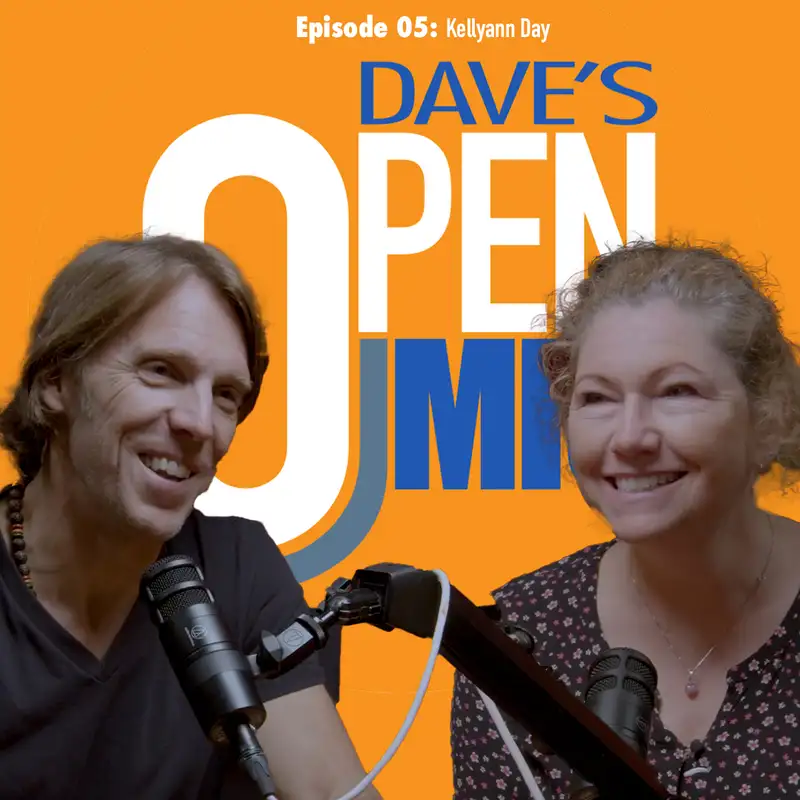
 Episode 5
· 01:01:32
Kellyanne, thanks for coming.
Yeah, thanks for having me to.
My studio here.
Chat a little bit.
Where is your main office?
Because I know you have a new haven in,
Bridgeport.
Bridgeport? And you're out of.
I can't remember, I was. There, but.
Yeah. It's on Park Street in Fairhaven.
Oh, Fairhaven. Okay, okay.
Yeah, yeah, we've been at that,
like that location since 2020.
Okay. Yeah. Okay.
And you're with new reach.
And what you guys do,
you're not necessarily a homeless shelter,
but you help people that are either.
I'll see if I get this right.
Maybe in danger of losing their home.
Maybe their, you know, experience
some sort of crisis in home
or whatever is home with that.
And then people who kind of need some
either temporary, more long term housing,
as, I don't know, I if I got them
all right there.
So I want you explain to me a little bit,
you know, why New Reaches
is there and and what,
you know, what people can get out of it.
Yeah. How you help the community?
Sure, sure.
So new reach has been around for 35 years,
and we did start
as a homeless shelter
for women and children back in 1990.
So we were providing
ten units of emergency
homeless shelter for women and children.
And we started to realize
that there was not
a lot of options for them
to move out of homelessness.
And so we participated in the creation
of a number of different new programs
to help folks move out of shelter.
So, over the course of the past 35 years,
we actually have evolved
into kind of three areas of expertise.
So the first is, homeless prevention.
So we go upstream
and we work with households to help them
avoid ending up in a housing crisis,
avoid ending up
having to call and say, I'm homeless,
I need emergency shelter.
So those programs are located
in Bridgeport and in New Haven.
So the homeless prevention is an area
that we would like to scale up
a little bit more.
For obvious reasons.
It's better for people.
It's better for our communities, you know,
it's it's better overall to help folks
stay where they are rather than have them
experience a housing crisis.
So the second area of expertise
is in the crisis field.
So we do operate two emergency
homeless shelters, the Life Haven Shelter
and the Marketplace Shelter.
And those are for women and children
and for single women.
Every you
know, we talk about ending homelessness,
and some people think about that,
meaning that you'll never see somebody
who's homeless again. Right.
But that's like saying let's close
emergency rooms.
Yeah.
Because you'll never have an emergency.
You know, it's it's not realistic.
Right.
So, so we need to have emergency shelters
for people
who fall into that crisis
for an emergency.
And then the third area is housing,
because, again, folks
need to move out of that situation,
and we need to stabilize our households
in our community
and make sure that they're thriving
and able to, raise their children,
go to work, take care of their families,
take care of their health.
So when we use the term ending
homelessness, we define it as making it
rare, brief and non-recurring
or one time and so new reach.
That's what we do. Awesome.
We prevent to make it rare right.
We provide those crisis services.
Hopefully that's a brief period of time.
Right. And then we have folks that's okay.
We house folks and and we support them so
that they don't end up back in a crisis.
Yeah.
So so when people hear that term ending
homelessness,
it does have a meaning behind it.
Sure.
You know, and new reaches in that space
where we're we're making it
rare, brief
and hopefully one time or non-recurring.
Good.
I think I might.
I told you when we first met,
I did some work for a homeless shelter
in Hartford.
I try, I remember the name cause
I always forget,
Saint John's in life, Saint John's.
And anyway, they're up in Hartford.
They've been around for a while,
and I was talking to,
one of the women who was help
founding it.
And this goes back
to, like, ending homelessness, right?
You're talking about.
And the reason they started was, I guess,
I don't remember all the details,
but the government was closing down
all the, the mental health, facilities
or whatever. Right.
And the idea was to close all those, the
big ones and then open little small ones.
So they started because then now there's
there's a lot of people out on the street.
They have nowhere to go.
So they started Saint John's
in sort of like
as a temporary homeless shelter for people
until the state was able
to make these little while
the state never followed through
and did their little thing.
So they're still going in now there.
And what's up?
What I learned, too, is that,
they were telling me about it.
I don't know where they are status,
but they want to sort of the town
or the city wants to reclaim that land.
So they're kicking them out.
And so they're looking for a new facility
to go there in this beautiful church,
which is probably
they probably need to upgrade anyway.
But it's same time, you know. Right.
They're being forced out. So yeah,
they'd never thought in a million years
they'd still be doing this.
However, you know, 30 years later
or whatever it's been.
Yeah.
Deinstitutionalization is what really
created an explosion in homelessness.
And so back in the,
in the night
the late 90s and the early 2000,
kind of the response to that was creating
what's called supportive housing.
So kind of your mention of creating
smaller areas
that were more respectful
and supportive than large institutions
for folks who are suffering
with mental health issues.
And so supportive
housing was a huge success
and a new, program for all of us.
You know, a new reach was a part of that.
We created the first permanent supportive
housing for families in the state.
And when we say supportive housing,
it's really just two parts,
which is it's creating an affordable
apartment for a place for someone to live
that they can afford,
and support services, surrounding them
so that any issues that might come up
that could potentially threaten
their housing could be addressed
before they lose their housing.
And so the state actually scaled
quite a bit of supportive housing.
In the early 2000, Snhu
reach opened a number of of supportive
housing units and buildings,
as did other nonprofits.
And it was really very, very successful.
What what we started to realize
is that, supportive housing
was really designated
for an acute population,
you know, households
that needed that support services ongoing
in order to maintain their housing.
But as time went on, we saw more
and more people who didn't really need
that level of support ongoing,
but who really needed the affordability
piece and and a quick shot of services
to get them stabilized again.
And so,
so a few other programs started to to,
you know, take shape,
which rapid rehousing is one of them.
And, and that was kind of a bridge
from homelessness to stability.
And that was working really well as well.
What happened
is the housing crisis in this country.
Right.
So, when we were implementing,
the system,
supportive housing and rapid rehousing,
we were actually seeing
the numbers of people
entering the crisis system decline.
For a number of years,
we were tracking a downward
trend in people who are experiencing
homelessness in the state.
Okay, then Covid hit.
Yes. We stopped developing housing.
We stopped developing affordable housing.
People started moving in
from out of state.
Home prices started to increase.
And we saw really
the corporatization of housing.
So we saw these big corporations building,
you know, large
housing units, luxury housing units.
And and there's a market for those. Sure.
Because a lot of people
living in those luxury apartments would
otherwise have bought homes
that are now out of reach for them.
Too expensive.
And so so when you have that pressure
pushing down
the folks in the lower
end of the economic spectrum
are now getting priced
out of out of housing, you know, so
so we started to see the numbers of people
experiencing homeless increase.
So, you know, we were often asked,
you know, you have this
you talk about this great system
that you have, for people
who are experiencing homelessness,
how come the numbers are going back up
and it's it's
not because the system's not working.
It's the system is overtaxed.
We have too many people
coming into the system and not enough exit
destinations and affordable destinations
for them to move out of.
So, I mean, the system isn't a solution,
right?
It's just it's right.
It's it's just helping people who are.
So what's the solution?
I mean, how do we because for example,
Madison, I don't know, I don't know.
All the details are a little bit vague,
but I guess in Connecticut isn't there
like a mandate
or talked about mandate of each community
or town has to have 10% affordable
housing, right?
Or something like that.
Now I do, I have that right or.
There's a statute, there's a statute
30 day, okay, that that says,
you know, more than me.
It's, it's it's a statute
that says if you wanted to develop,
affordable
housing in Madison, for example,
and the folks in Madison
blocked your project, right.
So you want to develop some housing, and
and the zoning board says, no,
you can't develop here.
For whatever reason, you could invoke
830 G that
says, well, Madison,
you only have 5% affordable housing.
Okay.
So you you really can't block this
unless there's a real safety issue.
Okay.
You know,
so it's a tool for developers to use,
to try to combat that Nimby.
Not in my backyard.
But developers have to be willing to,
to invoke that, you know, and challenge
that in order to move forward.
Now, we did have a victory this,
this week, actually,
the state House representative passed,
a bill, that is talking about
having all the towns in
the state of Connecticut have to create,
a specific number
of affordable units in their town.
It's called fair share housing.
And so that every town, you know, is,
is going to be kind of assigned a number
based on some formulas to say, okay,
you don't have enough.
So you have to create
200 units in your town.
But a smaller town,
maybe you only have to create 150
units,
you know, and people get scared of that.
You know, they feel like, they feel like
the state or big government is saying,
you know, they're taking away their local
control of of what's happening.
But at the same time,
many of those towns are also saying,
you know, there's there's no affordable
housing for my college student
who's coming back to Connecticut
or for a young couple,
you know, who are trying to buy a house,
you know, so in each of these towns,
they can they can participate
and help create what that affordable
housing looks like in their town.
It doesn't it doesn't necessarily
look the same in Madison
as it would in New Haven or in Hamden.
It can be created within the culture
and the architect
and the space of the town.
But we do have to create some density
in more of our towns.
What makes affordable housing is
it is across the board.
It has to meet these numbers or whatever.
Or is it vary between,
you know, between towns
like Madison or New Haven or Westport or,
you know,
Danbury or Derby or something like that.
So so how does that.
What the federal government comes up with,
you know, these,
what they call the area median income.
So they look at what,
what's the median income for an area?
And then they have these, these formulas
in these percentages to say,
you know what
what makes, you know, an area affordable?
What what's the salary that you need
to have in an, in a household
in order to qualify
for a certain affordable housing.
Right.
And so there are different percentages.
And so, that's all created based on the
census data and salary data and such.
And then there's the fair market rents.
Right?
So, which are also created
by the federal government in hand,
looking at what the fair market rents are.
And so that's, that's
typically the barometer for what landlords
are using for their rental units,
you know, and so a fair market rent
is not necessarily an affordable rent.
Right.
So affordable rents are typically less
than the fair market rent you know.
So but what's happening right now again
going back to the corporatization
of housing and all of these new luxury
apartments coming up, you know, a fair
market rent in the New Haven area is
I think it's like 1473 for a one bedroom.
But many of these one bedrooms
are going for $3,000,
you know, so
because of supply and demand, sure.
It's microeconomics, right.
If if you have, not a lot of units,
you can charge
more and landlords can charge more.
So so again, people on the lower
end of the income spectrum
are getting priced out.
So they could maybe afford a fair
market rent.
But now fair market rents
are kind of going out the window
because these luxury,
you know, apartments and home
homes are going for 50, 60, $70,000
more than they were five years ago.
Yeah.
So, so it's and it's it's complicated
because there are different ways
to make, a unit affordable, right?
So the developer can access money
when they're developing
to make it affordable,
and then they can base the rent
on, again, these formulas
based on these area median income.
Or a developer can choose
to have subsidies attached to their unit,
which then that the landlord
will get the fair market rent.
But the tenant will only pay
30% of their income
and the subsidy will cover the remainder.
Okay. So it's complicated. Yeah.
And there's all different ways
to kind of create
an affordable, unit for, for folks.
So that's where, you know,
it's important, I think, for towns
to get together and start talking about
what makes sense for their town.
But I think that overall, you know,
we're short
almost 100,000 affordable
units for folks in the state.
Yeah. Right. So yeah.
And an interesting thing
that someone just brought up to me
recently was you know Airbnbs.
Right.
So folks have said okay well
why do we have so few rental apartments.
It's not like so many
people are moving into Connecticut.
And actually in fact,
we're actually losing population.
So why. Should we.
Because because is it
do we're losing during Covid
or because it feels like New York
was moving into it?
Does it does.
But I think there's also been
a lot of folks moving out of Connecticut
to go to cheaper tax states and,
you know, things like that.
So, so why why are there
why is there a lack of units, you know,
Airbnbs is potentially one reason
why there's a lack.
So, so stead of renting long term they
you can make more money, leave.
Your insurer
so you can Airbnb and you take your
you take your unit off
the mark off the rental market.
Yeah. Right.
So it's interesting.
I don't know much about it.
Someone just recently mentioned
that to me, but it makes it makes sense.
There's all sorts of Airbnbs,
like from a bedroom and like a basement
that like.
Like a full house, right?
You know.
On a ten acres of land.
Know, because I do Airbnb all the time.
So I'm traveling
that my dog and stuff says we do.
And yeah, yeah.
But I could see. That, right. Yeah.
It's an interesting thing to look into.
Yeah.
I haven't really looked into it, but
but yeah.
So the state is
the state is starting to ramp up
its creation of affordable housing,
which is great.
But as you know,
we're, we're small state.
There's only so much land right there.
And, and we have old infrastructure.
Yeah. Right.
So so it makes the creation
of housing more expensive.
Yeah.
Which means that, you know, for profit
developers have to
they have to get their, their investment
back.
Right.
So and they're going to get it back on
affordable housing
or they're going to get it back on luxury
housing.
Right.
So that's where the state
needs to step in and say,
we're going to we're going to subsidize
the creation of this so that we can
we can have more affordable housing.
Gotcha. State.
So, so so they're doing their part.
But we
need we need the towns to welcome it.
Yeah.
And to be a part of the discussion
and to say, okay,
this is what it should look like
in our town.
So Madison is, building a lot
and I don't know
if I doubt they're all affordable housing
because it's just there's a lot of
I haven't seen as much development, not
years, you know, and they just clear cut
swaths of land and build these massive,
I mean, massive houses.
And it's yeah.
It's really a lot.
And right downtown they built a big,
like compound of all these houses
right on the marsh.
And that's another thing
I read somewhere, for affordable housing.
And I get it.
I know we need it,
but it seems like if you're going
to have affordable housing,
some of the environmental regulations
kind of go out the window where you can
you can build if it's affordable housing,
you can build on land that you wouldn't
maybe necessarily be able to build on.
If it's just a regular house.
I'm not so sure that that.
Okay, I don't know. I'm not.
I'm just.
On there. I don't know,
I don't know if it's accurate or not.
I thought I read it somewhere
a couple of years ago.
I could be completely wrong.
I know that,
there are a lot of regulations.
Yeah.
When you're building affordable housing
and it typically takes longer,
because of the regulations and the hoops,
and it's typically more expensive.
Yeah.
And I've never heard that you could bypass
any of those, but, Yeah.
Yeah, maybe I read usually the standards
are the little bit higher that.
Yeah, sure. Oh.
Got a private developer.
Yeah. Yeah. Yeah.
Because you're using public dollars.
Yeah. So.
Oh, true. Yeah,
yeah. I'll have to go research out.
Yeah. Check that one out.
I don't know it. Yeah, yeah.
Okay. That one might be wrong.
We'll put that. Yeah.
Like don't listen to me.
Yeah yeah yeah. This one.
Yeah. Yes yes yes.
It's good.
So, what would make somebody like,
what are some of the reasons
that people are home?
Of course there's, they lose their job.
Maybe they, they get injured
because when I was doing this,
video up in Hartford,
I was talking about, it was interesting.
It was kind of an eye opener.
And, some of the people just
they had an injury
and they were taking medication,
and they get hooked on the medication.
Before you know it,
you know, their their family
and they lose their house,
and now they're
and now they're here and there,
but now they're clean
and they're regrouping
and they're going to go out.
So I guess there's some of that. There's
losing a job. There's all sorts of things.
What have you seen as as
is there a trend now that's happening.
Why people are losing their homes
as the trend change from,
year to year or whatever.
So there's a book that came out,
I want to say it was in 23, that,
that was called or is called,
homelessness is a housing issue.
Right.
So, the increase in people experiencing
homelessness is directly related
to the availability of affordable housing.
Okay.
It's not because
people are addicted to drugs
or people are mentally ill.
They're those
factors are present in the population.
Just like they're present in
the population of people who are housed.
And so but but they're
the most visible population
that people often see.
Right. Okay.
So you see the person
who's experiencing,
an untreated mental health
issue on the street, you see the person
who is experiencing a substance
use disorder on the street.
Those are the most visible,
visible people that we see.
And, and often cause
and nuisance in communities that, that,
you know, real neighbors
struggle with, you know,
but that's not the majority of the people
who are experiencing homelessness.
Majority of the people are our children.
Our families, are people
who are doubled up our youth.
And it's it's
because we don't have enough affordable
housing for them
or housing, you know, options for them.
Years ago.
Right. We had we had the YMCA.
Yeah. You could rent a room. Yeah.
If you didn't want to have
the responsibility of an apartment,
you didn't want to sign a lease.
You don't want to turn on the UI.
You know, you don't want a kitchen.
You don't cook, right?
You know, you could rent a room.
It was affordable.
You could live there.
You know, somewhere along the line,
we all decided that wasn't a good option.
People needed more.
And, well, we
we closed down those those those,
those development, those YMCA,
those rooming houses and,
and then people
lost options, you know,
so, I mean, I think we need to think about
for that particular population,
maybe going
into a one bedroom apartment
isn't the solution.
We need something else that
where they can be supported and kept safe
and kept off the streets,
and not the old flophouse rooming house.
But something was services made available.
Something where there's nursing available,
there's case management available,
there's treatment available. Right.
So that those folks have a place,
so that they're not on the street,
they're not causing a nuisance
or dying on the street,
and they're given an opportunity,
to recover.
You know, in a safe space.
Yeah.
The renting a I mean, I
mean maybe I would, but probably not.
Just renting a room, I mean, maybe
a person who travels a lot and works
a lot doesn't need
because you're never there,
but you have a place to crash
when you need to.
And you that's and it's
I mean, it's an option
to, to make that unavailable to people
who just that's the way they like to live.
As a little bit, I don't know,
maybe not right or something, I.
Don't know, but yeah, we've zoned
we've zoned out of that.
Yeah.
So, so it is
something that we're talking about,
you know, wanting to look at
and the states actually considering
funding new housing
options for folks
that look more like that,
you know, rather than,
rather than presuming everyone wants
and should have a one bedroom with a lease
turn on there.
You know.
It's a lot
it's it's a lot to handle electricity
and heat and water and etc., etc.,
you know, now it's a lot.
Any choice, any choice, any choice.
Yeah, absolutely.
So why would somebody lose their home.
Right.
So do they get because you say now it's,
it's the lack of of housing.
Right.
So if they're in a, if they're in a house
are they is the landlord kicking them out
if they rent because the rent's going up
and not kicking them out,
but they're raising their rent
so they can't afford it kind of thing.
So what's happening is, when leases
come, do they jack the rents up
and then people can't afford them
and they need to move on
or they get evicted.
And so so we're seeing we're
seeing an increase in evictions,
you know, nationally,
but definitely in Connecticut as well.
Again,
it goes back to that supply and demand.
Landlords can, you know,
say I can get more than fair market.
Yeah.
You know, for a one bedroom
I can get 2000 rather than 1400.
So I'm going to charge you 2000.
And you know, someone
who maybe has been living there forever,
maybe, a senior, we're seeing more
and more seniors on fixed incomes
who have been renting the same apartment
for years,
who are now getting displaced, you know,
and they don't have
another option
because now they're in the market
and the market is charging,
you know, more than the fair market.
So so we're definitely see
an increase in the rents.
Someone will have to fact
check me on this.
But I believe rents went up about 43%
in the past five years.
So that's a lot.
You know, incomes are not going up
that quickly, but even close,
that cost of living,
you know, not, you know, going up.
Food's going up.
Insurance is going up, things like that.
So, so whereas we're seeing kind
of a new population of people,
entering into homelessness
and unstable housing,
which are people who, who are on
fixed incomes or have low income
that are now getting priced out of units
because of the cost of rent.
You know, we are seeing,
you know, people who are
we are seeing people who are experiencing
more, mental health
crises and families with children
who are experiencing more mental.
I mean, we we hear about this in the news.
It's happening. Right.
And so when
your child is experiencing a mental health
issue, it's it's hard to work.
Especially if you have a job
that's a service job or a shift job,
you know, and you're going to prioritize
your child, you know, who needs you.
And so your income's going to go down.
You might lose your job, things like that.
So, so we're seeing
those are contributing factors as well.
And, and we do see we are seeing a rise
in people using substances.
And, you know, it it could be
because people are self-medicating
because of anxiety and stress
and inability to maintain,
you know, a stable
a stable home for themselves.
People often
turn to substances to to self-medicate.
Yeah. You know,
so I always say, like there's
there is not necessarily
a stereotypical person
who is experiencing homelessness,
you know,
all the stories are are different.
You know, how people
how people come to be in that crisis.
When I was, at a facility,
you took me on a little tour,
and you don't only
you also help people with food,
which I think is because you mentioned,
like, the cost of living is going up
and food is,
you know, you open my fridge,
there's not much in there.
Just. It's just me. But.
Yeah. Yeah.
Because it's, it's,
you know, it's it's it's a lot.
And I was talking to a friend of mine
who has,
she's married,
I think four young children, maybe one.
The oldest is maybe 15 ish, I remember,
and I asked them, I said I was like,
what's your food bill a week?
I don't know, I he was like $600 a week.
I mean, something I'm like.
Okay, how are you crazy?
How do you do that?
You know, 600 a week. Yeah.
And then you got to go and do it again
next week.
Yes. It's crazy.
Food insecurity
like homelessness is on the rise.
It's trending up as well, you know.
And that's directly because of economics.
Yeah. Directly because of costs.
Yeah.
In January of 23, Norwich merged
a program called fish into our umbrella
organization.
Yeah. You mentioned that.
Yeah.
Fish has been around for 57 years
and in greater New Haven,
and it's,
it's food in service to the homebound.
And it's a program designed for households
that can't access food pantries.
So they're food insecure,
they're of low income.
They would typically go to a food pantry
to get their food.
But they for some reason can't get out.
So we serve a fair amount of people
who are elderly, seniors,
people who are recovering from operations
and don't have another adult
in the household
that can go out and and get food for them.
So, so we deliver groceries.
It's not Meals on Wheels.
We don't deliver pre made foods or meals.
It's groceries.
And so we're partnered
with, Connecticut Foodshare.
So they provide us with the food
and our organization recruits,
volunteers to pack the, the grocery bags
and then to deliver the groceries
to people's home.
So, so it's a great program.
When Covid happened,
the funding from the federal government
increased for food insecurity.
And so fish was delivering
to over a thousand households
throughout greater New Haven.
As those funds started to go away
and expire, we've had to decrease
the number of households
that that we're delivering to,
not because the need decreased,
but because the funding decreased.
So so we're now down
under 500 households.
And we had to make it's still a lot.
Yeah. So that's a lot.
That's a lot of a decrease.
Yeah. It's a lot of a decrease.
And and it's
and it's not because the need isn't there.
It's because if we want to continue
to serve those 500 households,
we had to make hard decisions on on who
who needed the food the most.
Yeah. You know, which is which.
These are these are decisions
that I'm not sure the general public
understands, the decisions
that nonprofits are making right now.
It's we do this work because we want to
help.
Sure.
We don't want to say no to people,
but we only have so much resources
in order to provide these services.
So we have to say no to some folks.
I often tell people, you know,
you think that
if you were to become homeless,
if you were a family and became homeless
and you called the system
and said, I'm homeless tonight,
you would think that you could
just be placed in a shelter. Or.
There are waitlists for shelter.
And we have to often decide
who is the most needy tonight
to get that open shelter bed.
You know, it's the same with food.
Who is the most needy in a country
like ours?
We shouldn't have to be making those
decisions on a daily basis, you know?
But those are the decisions
that nonprofits
are making every day
just to try to just to stay open.
Right?
Just to be able to keep providing the
services to some of the folks who need it.
How much is your,
your your budget that goes
to housing people and helping them
with services and food and stuff?
Like how much?
How much is that?
What's the what's the difference between
what's funded through the government,
whether it be federal or state
and what's funded through,
you know, donations from organizations
or private donors or whatever?
Yeah, we're about 80, 20,
80% public dollars, okay.
Through state municipalities
and the federal government.
Yeah. And then about
what was the other way around?
Yeah. Yes.
Yeah.
There's so many reasons why I wish
it was the other way around, too.
But, you know, when I first started,
I've been doing this for 30 years.
And when I first started.
And you reach the public, dollars
covered our costs.
Yeah.
We didn't need to fundraise.
We didn't have to fundraise.
But the dollars from the public
have not kept pace
and index with the cost
of our services,
the cost of doing business.
And so over time, we had to fundraise.
You know, I remember
when we had to fundraise $10,000
a year, it seemed like such a big amount,
you know,
that's why you see everyone's
having events and they're having,
you know, they send out letters
and please give us a donation.
It's because we have to fill that gap
for what we're doing.
If if we want to keep doing
what we're doing, you know, so we are
we are well over $1 million
that we need to fundraise every year.
So just a little,
you know, little commercial.
We're having our big gala.
You are next, Wednesday, June 4th.
And, it's at woodwinds here in Branford.
Oh, awesome.
And, it's an auction.
We have about 300 people.
Eric Hummel is our auctioneer.
Okay, we're actually honoring
a gentleman named Jim Sonnet,
who has been a volunteer
at our fish program for decades.
And so, would invite folks to come out.
Tickets are going fast,
so we're almost sold out.
But it's, you know, it's it's
something that that we have to do.
Yeah.
If we don't fill that funding gap.
Yeah,
we will have to close programs. Yeah.
And we can't do that.
Now to back up, I got a question.
Is that Hummel from Hummel hot dogs?
Yes. Eric Hummel. Yes. I'm
going. To have to go. Then.
He has been our auctioneer
for over 20 years.
It's awesome.
He's a very philanthropic and community
minded gentleman.
So no, we, yeah, that's good to hear.
We're very fortunate
that he's a friend of ours.
Now, this podcast is going to be posted
after your event.
Okay.
But we'll go ahead and, staff
to kind of cut out some.
So we'll catch something up there
for you to help you out,
because I think that's important.
Donations after the event are also, well,
of course there.
How can.
Well, while we're at that,
how can if somebody is listening now
and they want to donate their phone
number, website, email, what can they do.
New reach.org.
There's an opportunity to get involved,
to learn all about what we're doing.
You give online, you can send a check.
You can you can email me.
And happy to have folks
come down, see our mission in action.
Yeah. Come down.
We'll take you for a tour. Awesome.
A fish, we'll take you for a tour of life.
Haven. Good.
We can show you, you know, the impact
that we have on on this community.
And we can
talk about the impact on this community.
If we had to decrease our services,
you know, which would impact many of us.
Yeah, I definitely, definitely would.
Can people they can give money,
but can they also volunteer?
Do you pay people to volunteer to help
whatever it is that you need help with?
Yeah, we have folks.
We have groups that come in and volunteer.
They help, you know, do spring and fall
cleanups at, at our shelters.
You know, those are costs that we don't
always have in our budget to pay for.
And we want to be good neighbors.
So so people come in
and they help us do those kind of things.
Are they, we have volunteers who come in
every week and pack bags for fish
and volunteers who deliver the food
to people who are homebound every week.
We have volunteers that do what's called
third party events for us.
So, for example,
there's a group called limelight.
They do a dance recital,
and these young women put together
this event, and they raise money
and they donate that money to us.
Oh. That's good.
The New Haven County Bar
Foundation has a snowball tournament,
and they donate their money to us
with the snowball tournament.
So they go play.
They go play softball.
And a cold night in November.
Okay.
And it's competitive,
I think, for them, for the lawyers.
And, and we receive the donation.
Oh. That's fun.
For them to, to be playing.
So. But, you know, we had a young,
a young girl who just did a lemonade
stand over Memorial Day weekend.
And her mother matched the amount
she raised,
and her mother's corporation
matched that amount.
Oh. That's awesome.
Yeah.
So I always say, you know,
everyone can be a philanthropist.
Sure.
You don't have
to donate $1 million
to be a philanthropist.
Yes, you can donate $5.
And your your participating
and in helping your community.
That's awesome. Yeah.
Five bucks. And maybe next year it's six.
Right? No, but that's great.
I think that's. Yeah. So it just.
Yeah I guess because wow I have is $5
but you'll, you'll take as it's
going to go to it's going to go somewhere.
It's going to feed somebody.
It is you know maybe not housing
but definitely will help buy some food
for somebody or whatever you need it for.
So I think that's that's wonderful.
Yeah. $5 is. Great. Yeah. Yeah.
Very good.
We don't we don't have a lot of volunteers
in our in our programs,
you know, forward facing with the people
that we're working with because we employ
professionals, for that,
you know, the work that we're doing,
is, is best practice based.
Okay.
It is it our, our caseworkers
and our social workers are trained.
They're provided supervision.
They're given standards to follow,
that we know have helped
people move through these crises
and get to the other side.
So we, you know, we
we often have to explain that to people
that coming in and,
and sitting across from somebody
who is experiencing homelessness,
is something that the professionals
do, to help folks
get to that solution that they need.
It's not something that a volunteer
can really do.
Not at that level.
I mean. Not the level. Yeah, I get it.
Yeah.
You know, it's interesting
if you look at the history of social work,
you know,
you know, 50, 60 years ago, 70 years ago,
you know, it was volunteers
who created the profession of social work.
You know, it was mostly women
who weren't in the workforce,
you know, who were volunteering
their time and working.
But it's evolved,
you know, to a, a profession,
you know, where folks go to school
and they, they're trained,
in best practices that we know work,
help them
move folks from a crisis to stability.
But that's
not to say we don't welcome volunteers
to come in and provide a meal
and sit in community with the folks
who are who are in our shelters, you know,
or to come in and do a birthday party
for the kids at the shelter, you know,
so, so it's things like that,
and we're open to other ideas, you know,
but it's just really difficult for us
to, have folks
come in and want to do that
social work piece as a volunteer,
when it's really, you know, work
that our professionals are doing.
Well.
What's the trend been like?
Have you like the even 30 years?
You said, have you been to it?
I've been at New Reach for 30 years.
Okay. Have you done.
Were you anywhere before that doing this
type of work?
I in upstate New York, I worked, yeah,
and a therapeutic foster care program.
And so we did this for a while. Yes, yes.
Surgeons for a while.
I guess the
the homelessness part
or lack of housing or whatever.
Have you seen a trend between,
whether it be single men,
single women or women with children
or families has that trend?
Have you seen it change
as far as who needs assistance
in those kind of three groups,
or is it kind of stay the same?
So in other words, maybe was it more men
that were looking for homes
or was it, was it more women
or is it been kind of the same?
I don't know that the
I don't know that the percentages
have changed kind of demographics.
I do know that, you know,
we see children,
under the age of six,
are a large part of folks
experiencing homelessness
and then children under the age of 12,
you know,
we've seen spikes in youth, disconnected
youth, lot in the LGBT community,
who are disconnected from family.
I don't know if there's
been, you know,
a real spike in male female.
Okay.
So I think that it's a fluid
kind of, number,
what we look at mostly
are numbers of single people
versus households
that that include minor children,
you know,
I don't know
if it's the movies or whatever
when you think of a homeless person, you
think of a, you know, a man who, you know.
Right. So that's all I was asking, like.
Yeah, if, if.
If that was a stereotype
or it's just that's kind of how.
Yeah, you know what people think
that I it's a good question.
I, I have to look and say,
I would, I would probably think that
that might be accurate, that,
that men might make a larger percentage
of the single population.
I have to go back and check. Yeah.
But it's awful that kids are because
kids are all going on.
They just.
Yeah, I'm on a place too, you.
Know, and with families and kids,
they're not visible.
You're not going to see them.
So you're not going to necessarily know,
a lot of times they're doubled up
not because they want to be doubled up,
but because they have no other choice.
They're living in cars
or living in abandoned buildings,
but you're not going to see them.
They're not going to be
standing on the green with a sign
necessarily, because of obvious reasons.
There's fear, fear that the children
going to be taken away from the parents,
because they don't have housing.
You know, it's is that there's a stigma,
you know, kids in school
are not going to say to the school,
I'm homeless.
There's a stigma there.
So and there's fear, you know, of
what's going to happen to the family.
If that comes to light.
Is that something new?
Because, was it the,
does it signal?
How is it the children, families?
What's the state.
Department of Children of Families?
Yeah. Thank you. Yeah, yeah.
Do you deal with them? Like.
If so, if it do parents or mothers
have a fear
that if they're homeless,
you know, the state's
going to come and take their children
and stuff like that.
Do you work with those families and help
prevent that or if it is occurring?
Yeah, we definitely have a partnership,
with them
when folks are coming into our shelter.
We also advocate for on
and on behalf of our parents,
to say just because you're homeless
doesn't mean you're neglecting your child
or abusing your child.
So sometimes we're advocating right
alongside the parents to say
that's not the case. You know,
because if you think
about it, if one department at the state
is saying, you know, I'm
going to take away your children
because you don't have a place to live,
you know, we need another department
to provide them a place to live.
Yeah, right.
So, so,
so there have been some partnerships
between the Department of Housing
and the Department of Children
and Family that have helped, to provide
housing for families.
Yeah,
but we go back to there's more families
that need it than there are available
slots in those programs.
Yeah.
And and
it seems like a lot of the time it's
not their fault the rent,
the rent went up or what have you.
And it's not because they're not working
or not doing something or whatever.
It's just. Yeah.
And I would say the pros at DCF
are probably equally as frustrated.
Yeah.
You know, when they're working
with families that are clearly not abusing
and neglecting their children,
but just have no place to live.
Yeah. It's on hard times. Yeah. Yeah.
Right. Right.
I'm glad you're doing all that work.
Yeah. Yeah.
That's that's really, really good.
Yeah, that's very good.
So we have the June 4th event.
What else do we know
about what else is coming up?
I think that,
just to kind of let you know, your,
your listeners know,
we're really terrified about what
the potential cuts on the federal level
might look like for, for the state
of Connecticut, and people in housing.
And so, the cuts in HUD,
if, if the federal government
were to start,
cutting
the funding that comes into the state
for housing and affordable housing,
it's not going to just impact
the people that we're serving
in our supportive housing and our rapid
rehousing that I talked about earlier.
But, it's the, you know,
tens of thousands of units that,
are also supported through subsidies and,
and, and affordable housing structures.
And it's going to impact the landlords
who own those buildings,
and who count on those rents, you know,
it's going to impact the workforce
if people can't,
if people can't make their rent and don't
have a place to live, it's again,
it's really difficult to make it to work.
Yeah. It's going to affect the economy.
So we're really nervous about the,
the large scale impact
that, that cuts and HUD,
are going to have, to people
who are,
who are on stable housing of low income.
And then, of course,
you know, the Medicaid
and Medicare cuts,
are going to impact all of us as well.
So we're keeping a close eye.
It's hard to plan for the unknown,
in that in that case,
I think that's why
nonprofits are really talking about,
you know, how can we make sure
that our budgets are tight?
We're really reaching out to communities
to say,
now more than ever,
private donations are important.
We may be really heavily
relying on those to keep our organizations
alive, you know, through
what we're anticipating.
Could be some massive, massive cuts
that you'll see with the closures,
of programs across the state.
Have you experienced any thing from some
of the decisions that are being made?
Not yet, but you're sort of anticipating
and doing some planning.
Yeah,
there's a lot of conversations happening.
And, you know,
we just, you know, we we have to keep our
a close eye on what's happening,
and make sure that we're good
stewards of our public dollars
and our private dollars.
You know, I think that's why we
we cut back on the number of
people were serving at Phish.
Because we
know if we kept providing at that level,
at some point,
we put the whole the whole program at risk
of being able to operate.
So, so we're keeping a close eye on
what's happening.
We're we're being good stewards of,
of our funding, and we're really trying
to raise awareness in the community
that, you know, now more than ever.
We need the support.
I would really like to see those numbers.
At least the 20% go up.
I really think that's important
for people to,
because there's a lot of,
there's a lot of nonprofits in place.
There's a ton of them.
Every time you turn around,
there's something new, and and I get it.
But it would be great, too,
because children are involved,
you know, which is nuts.
They don't know.
So it would be great
to have those numbers go up
where people can give,
even if it's just a little bit because of,
you know, thousand people gave five bucks.
Yeah.
Right.
Exactly.
Or money to your point
about so many nonprofits.
That's something I think that is going
to be a conversation going forward.
So at New Reach, I mentioned fish
merged into New Reach in 23,
but Life Haven merged into New Reach
in 2012.
Okay. And our Martha's place moved.
It moved into East okay in 1999.
Well,
so we've done three mergers of programs
that were at risk of closing that are now
continuing to operate and and thriving.
Going forward with these cuts,
nonprofits are going to need to talk
about consolidating.
Yeah.
And working together, mergers
or some sort
of strategic partnerships,
to keep something alive.
Yeah. You know,
if things get really devastating.
Yeah.
So that'll be interesting to see.
Because mergers in the nonprofit
space are kind of tricky.
Okay.
Because they're,
you know, nonprofits are governed
by volunteer boards of directors
who are fiercely committed and dedicated
to their nonprofit as they should be.
But the idea of giving that up
a little bit or giving up some control
or partnering, can be scary.
And I think what we, you know,
what we learned through the mergers
that we did was you have to have
the right people at the table
with the mission and the vision as the
as the driver, not your own.
Right.
Because at the end of the day,
your own interest or if you're on.
That board is to help. People and if.
That if you're going to do that
in a greater area.
Or whatever, then yeah. Yeah,
I think it would be beneficial.
Yeah. But it's hard.
I get it too, because it's just like,
you know.
Yeah, yeah.
Now new people are coming
in. Yeah, yeah yeah.
So I don't know where I get it,
but it's good.
But something
I think we're going to need to. Yeah.
To look at as a sector.
Now you work with Vinnie
I would not work with him
but whatever I know you know Vinnie down
at, homes for the brave, right?
Yes, yes. Yeah, yeah, yeah.
He's terrific.
Do you, do you do any collaboration
with with those folks at all,
or are you just sort of like,
kind of talk?
Yeah.
Well, so the, all of the homeless
and housing providers, collaborate.
We actually have a very good system
in place.
It's called the Coordinated Access
Network.
There's seven of them around the state,
kind of regional based.
And so greater new
Haven, greater Bridgeport,
you know, have what's called
this coordinated access network.
And so workers from all of the different
housing and homeless provider nonprofits,
they meet together,
they talk about and help plan
for the folks who are coming into
the system right at the front door.
So when people call 211,
which is kind of our entry point
into the system, they are connected
with those coordinated access
networks in whatever region they're living
and the, the group surrounds them.
So homes for the brave out the community
services, new reach, you know,
the program recovery network or programs,
all of those in greater Bridgeport.
Those staff work together to say, okay,
how can we either divert
somebody from shelter
because we don't have enough shelter
units, or who's most vulnerable,
and we need to move into the next
available shelter unit?
And then who are we housing?
How are we moving
people out of shelter, into housing.
And so all those programs work together
and they all say, well, you know,
this is the situation.
I have an opening here.
If if homes for the brave have an opening
and it's a veteran and it's a match.
Okay.
Do we have someone,
you know who meets that need?
You know.
So so it's an amazing system.
It's been in place for ten years.
It's kudos to the nonprofits
that all of us who came together
to pull the system together.
It was an unfunded mandate that we do it.
Oh, there's a lot of grumbling early on.
Does that. Work? Unfunded mandate. Yeah.
But where do you see this? Okay.
Yeah. That.
Yeah.
But ten years later, it is.
It is a better system. It's not perfect.
But it's a better system for people
in crisis who need who need support.
Today used to be you would have to call
all the different shelters.
So if you were experiencing
homelessness, call
Columbus House or go line up,
see if there's a bed.
If there was not one,
you know, you'd go to Emmanuel Baptist,
which was a shelter on Grand Avenue and,
you know, family shelters.
You call Christian community
action or life Haven or
and if you had a unit,
you could potentially get
in, if you didn't,
you just have to keep calling around.
Yeah.
It's not the best system
for someone in crisis.
So so the coordinated access
network, again, it's not perfect.
People can pick it apart,
but it is a system
that is, is working,
for people to get it now.
Again, it's it's overloaded.
Sure.
We don't have you know, enough capacity.
So people say, I've been on the phone
with you on one for hours.
Well, that's because there's
so many people calling, you know,
there was a number that I heard recently
that we had close
to 130,000 calls to 211
for a housing crisis in 2024.
I mean, that's like the population
of New Haven.
Yeah.
You know, so it's a lot
a lot of people are in a crisis enough
where they're picking up the phone
and calling.
I mean, maybe not all of them are saying
I'm homeless, but it's a crisis.
Enough sure that you're picking up
the phone and saying, what do I have?
You know, what are my options?
Do do churches get involved?
Churches are involved. Yes.
We definitely rely on churches
to support, churches.
Our our amazing partners, with all of the
nonprofits, they raise funding for us.
They do toiletry drives, they volunteer.
Yeah, we definitely rely
a lot on the churches and their support.
As well, because, I mean, people don't go
that many people go to church anymore.
There's some churches
are busier than others.
But but I think the overall trend is.
So I'm just wondering
if I know they're involved.
But as
have you seen their participation diminish
a little bit over the years with soap?
Because the parishioners aren't showing
up. People don't go to church?
No, I really we have not
we have seen, at New Reach.
We have many churches
and other houses of worship, synagogues,
mosques, you know, that
that support the work that we're doing.
Yeah.
We, you know, we are very thankful for,
for our church partners.
Absolutely.
And our houses of worship,
and we're thankful
for a lot of our corporate partners.
You know, I always give a shout out
to Town Fair Tire, okay?
They're one of the most philanthropic.
You know, corporations,
I would say, in, in this area,
just great people who care deeply about
what's happening and who put their money
where their mouth is, you know?
All right, well,
now I got a shout out town for a tire
because I haven't gone to town
for town forever.
Because it's always like a mess
every time I went.
So I went to private things.
So, it was a, I think it was a Friday
or is a Saturday, I can't remember.
It was Friday. Saturday weekend
was weekend, end of the day, whatever.
And I had to drive to Boston
or something on Monday.
So. And I'm driving down just over here
and I ran over a flat
tire and I it was all wheel drive,
so I needed again.
I was going to wait.
It was October, November,
and I was going to wait until December
to when I called it to get new top
whatever I was.
So, so I called around.
Nobody. Nobody's opens the weekend.
I can't get in anything.
So I called town for a tire, and I'm like,
yeah, we can take you on Tuesday
and explain the situation or wherever
the day was. And I said, you know what?
Yeah. No, we got space coming tomorrow
morning for single book. Yeah.
So yeah, I went in, Branford Town
for tire and Branford to hook me up.
New tires. I was all set.
I forget that wish.
I remember the guy's name. He was awesome.
But yeah. So, yeah, big shout out.
And I think that's the corporate
culture there. It was.
Very, very cool that they hooked. Me
up. Yeah, yeah.
So Neil and Mike Mellon, the two brothers
who owned Town Fair Tire and fortunately
Neil passed away last year.
But I'm sorry, Mike
is still very involved.
Yeah, yeah.
No, that.
Was I was shocked that they got me in
and just done.
I was I didn't
I wasn't because I didn't even have
it wasn't even a full size spare.
It was like a. Donut right right, right.
Yeah. I can't go to Boston on it. Exactly.
I got to work. So. Exactly.
Yeah, yeah, yeah.
Shout out to town fair.
Yeah. I really great people. Yeah. Good.
Oh, good. I'm glad involved.
And we have other great supporters.
There's a lot of unsung heroes,
you know, in greater New Haven and folks
who who want to remain under the radar,
you know,
a lot of folks that are donors
at the five and six figure level,
you know, that,
that give to a number of organizations
and they care about,
about the work, you know, so,
we're we're very fortunate,
I think in, in, in Connecticut
that we do have people who have the,
the opportunity and the means to give
at that level, you know,
and I think we just have to keep, keep
raising the awareness of what's happening.
I think that might be part of it. People
might not know that you're there.
Right. And, you know.
So hopefully
this will help a little bit. Yes.
Thank you.
Yeah.
It's always about raising the awareness
of what we do.
And,
if our mission resonates with with you
and what you're interested in supporting,
then give us a call.
You know, we're I'm we're happy
to we're happy to to share our mission,
you know, to share our challenges.
You know what?
What's working
and what what's what we struggle with.
And, yeah, yeah, as you.
Said, some people that a lot of
these people that need help are invisible.
We don't see them because and,
but but they're out there and they need
they need some help and if you don't see
somebody who needs help,
they're you're some
everything's just dandy.
But and we have amazing success stories,
you know.
And you can give me an example.
Yeah.
We have, you know,
I recently got a phone call from a woman
who had been in life haven
ten years ago, and she me out of the blue,
and she said, I just need to call
and tell you that being at Life Haven
was a game changer in my life.
And my two daughters lives.
It was a wake up call for me.
The support you gave me changed
and saved my life, you know?
Now I'm married.
I'm about to buy my own home.
You know,
my daughter has finished high school
and is going on to college,
and it's not honor student.
And, you know,
and and it's because of the support
and the help that I received
when I was in life.
Haven. And so,
I don't always get to hear those stories.
Yeah.
You know, I often get the other phone
calls, you know, like,
how come I can't get until I haven
or I don't have enough this or that?
The other, but those are the
those are the phone calls
that keep us going that fill our walls.
You know, you know,
the fact that Norwich has employees
who are formerly homeless and former
residents, you know, who are now paid
professionals on our staff and, you know,
giving back, but also earning a living.
Yeah.
And growing their career and
their stability, you know, is is amazing.
And I'm really very proud of you know.
And they truly want to help.
There's people out there
that really want to help other people.
It's what they do.
You just got to find
we don't do this for the money.
Yeah. Yeah.
But at the same time,
these are our careers.
You know,
these are the work that we're doing.
And, and we're not volunteers, you know?
And so that's, that's something that
we often, you know, battle with as well.
You know, people say, well, how
come you're paying that person that much?
And it's like, well,
because they're worth it. Yeah.
And they're doing a really important
service.
Yeah.
And they're trained and they're supported
and it's really hard work.
That's hard work.
Yeah.
And it takes, you know,
it takes professional training to have.
Patience and understanding and.
Compassion, passion, integrity,
all that professionalism.
Right. You know, takes a lot.
Yeah. Help to help people that are yeah.
You know, on the verge of, you know,
falling apart or have fallen apart.
Yeah. I have another great success story.
You know, we have a big Christmas party
at Life Haven every year. And,
there's a group
of gentlemen who come and provide
all the food.
Joey B is Santa.
Every year he dresses as Santa and
we give away toys, and it's, It's great.
It's the Port Cini group.
And, this past year,
when we were at the party,
notice that there was a young man coming
in bringing a whole bunch of extra toys.
And I thought it was just kind of a random
donation that someone showed up.
And come to find out,
it was a young man whose,
mother and younger brother
were staying at the shelter.
And, he was recently hired at Sikorsky
after going through a fellowship
and having gone through the Eli
Whitney program, and,
he bought presents for the children
at the shelter out of his own pocket.
That's great.
You know, 19 years old.
Wow. $2,000 worth of presents.
Oh, we call the shelter.
Give him back.
So, you know, again, like, that's a hero.
Yeah, that's a philanthropist, right?
That's.
And, you know, we were really excited
that we were able to honor him.
The city of New Haven honored him.
We were able to get his his teachers
from Eli Whitney,
the HR director from Sikorsky came.
You know, and it was really
it was really great to honor a young man,
for a really amazing thing
when sometimes all the news is bad.
Yeah. You know, so.
Yeah, we need more news
like that. Yeah, absolutely.
And we were able to house
his mom and his brother.
Good, good. Yeah.
Well, I'm going to end there.
That was, I love that.
Yeah, yeah. Really good.
There's really good people out there.
I just got up and you're.
You have a lot of them mature.
We have a lot of them at your place.
So thank you so much for everything
you do. Thank you for coming.
Thank you.
And chatting with me for a little bit.
I had a really good time
learning a little bit, I hope.
I hope, people listening are going to
learn a little bit and, and, before we go.
Yeah, one more time, website
and any kind of information
if you want to get a hold else.
Yeah. Yeah, that one was new reach.org.
We have a Facebook page.
We have an Instagram.
We have a LinkedIn.
We're pretty easy to find. Awesome.
So feel free to give us a call, send
an email to, Yeah.
Just donation. Thanks, Kellyanne.
Thank you very. Much.
Thank you,
thank you. Right. See everybody.

Listen to Dave's Open Mic using one of many popular podcasting apps or directories.